A Practical Light Guide for Houseplants
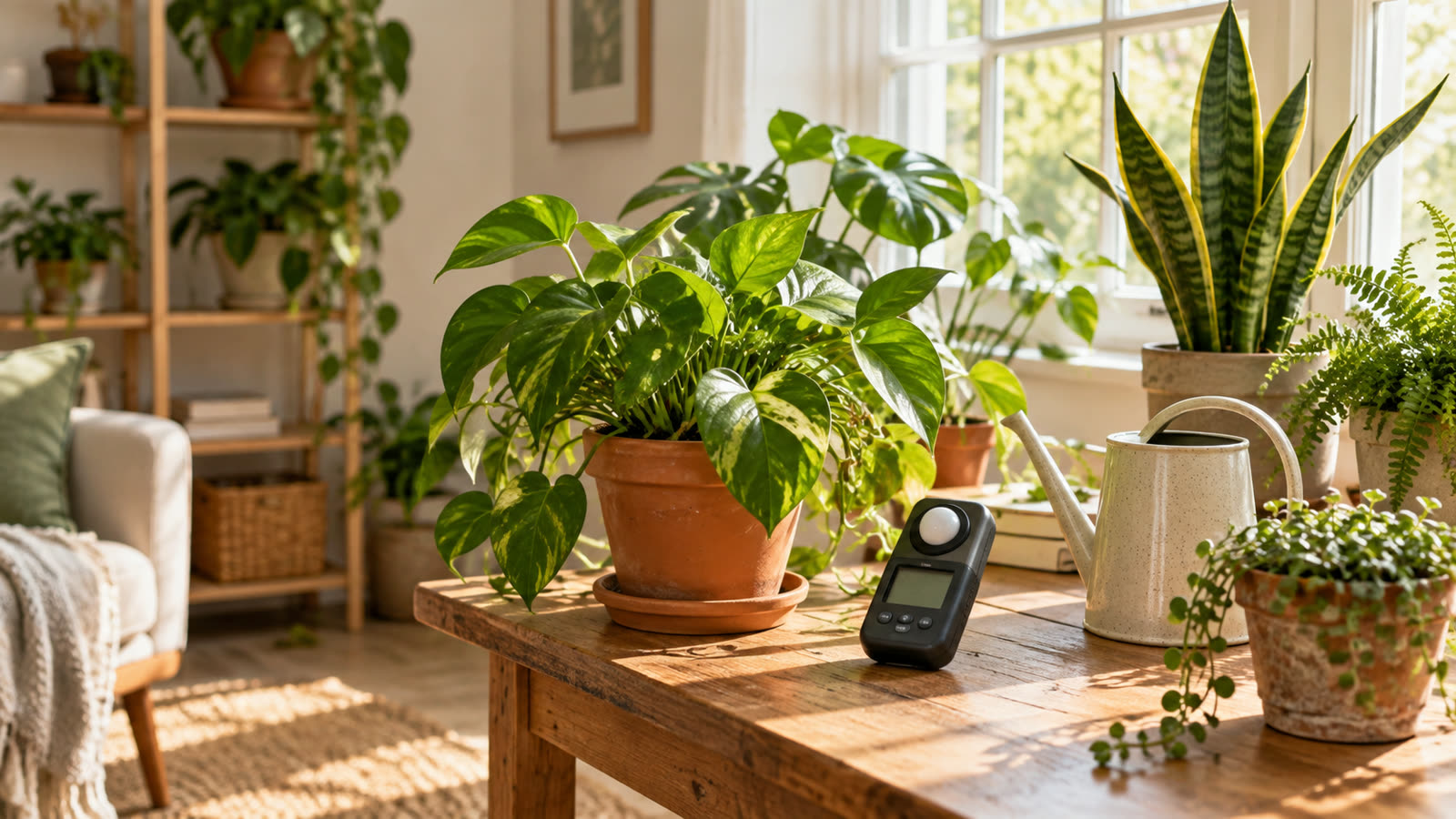
Green houseplants arranged near a bright window
Many houseplant problems begin with light, not water. A window can look bright to us while still being too dim for a sun-loving plant. Understanding the window and its daily shadows helps you choose a location before buying fertiliser or changing the pot.
Know the difference between light levels
Direct light reaches the leaves with sun rays. Bright indirect light is close to a window but behind a sheer curtain or outside the direct beam. Medium and low light are farther away. Light intensity drops quickly as a plant moves back from the glass.
Read the plant’s signals
- Long, leaning growth and small leaves can indicate insufficient light.
- Bleached or brown patches and very fast drying may come from harsh sun through glass.
- A plant that barely grows while its soil stays wet may not have enough energy.
Match the plant to the window
South- and west-facing windows are often brighter, while north-facing windows are gentler, but buildings, curtains and seasons change the result. Place sun-loving plants near a bright window with a sheer curtain, and move sensitive plants a little farther back. Rotate pots every couple of weeks for balanced growth.
When is a grow light useful?
If a room is dark or winter days are short, an LED grow light can help. Position it above the plant and follow the maker’s distance and timing guidance. Give the plant a daily dark period, and do not place the light so close that leaves heat up.
A simple observation routine
Photograph the plant from the same position every two weeks and note leaf colour, growth direction and soil moisture. Move it gradually rather than from harsh sun to a dark room in one step. Good care is observation over time, not a rigid schedule for every species.