Mars Rocks Hide a Water Story—and It Was Not a One-Time Visit
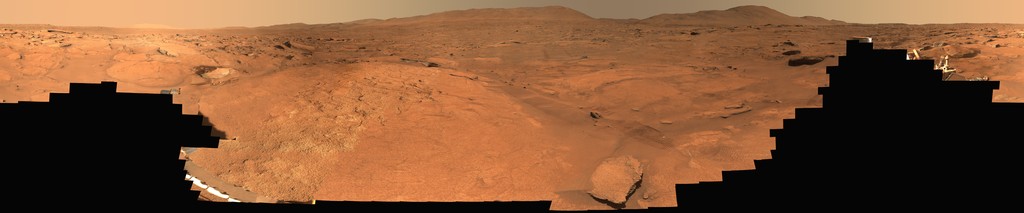
Margin Unit panorama, October 2023. NASA/JPL-Caltech/MSSS.
If a rock could say “this place has changed,” Mars would offer some excellent candidates. They do not need voices—just someone who knows how to read minerals.
At least three ancient encounters with water
On 21 September 2026, JPL reported that rocks in Jezero Crater’s Margin Unit preserve evidence of at least three water interactions. Perseverance’s team found igneous rock where sedimentary rock was expected. Researchers can establish the sequence, not the episodes’ ages. The finding does not establish life.
Why that makes the story interesting
Consider the difference between “water passed here” and “this place has a history of change.” The second invites better questions. Are we seeing one result or accumulated traces? What must we separate before settling on an explanation?
That is an analogy for thinking about the finding, not a visual reconstruction. We do not know exactly how the landscape appeared at every stage. Filling those gaps with imagination is fine for fiction, but not for reporting.
A good discovery does not need an alien
Headlines that jump straight to extraterrestrial life miss the genuinely enjoyable part: something apparently still can preserve a record of change. To Dajran, the rock resembles a notebook. The challenge is that its pages are not written in an easy language.
Another appealing feature of science is that surprise does not require hiding the original expectation. “We expected one thing and found another” begins an investigation; it does not mean the story has failed.
Three ways to read this cautiously
- Distinguish evidence of ancient water from evidence of life.
- Do not turn a sequence into dates that remain unknown.
- Read the original account before sharing a dramatic headline.
The cover is a real panorama captured by Perseverance in October 2023, not flowing water today. Credit: NASA/JPL-Caltech/MSSS.
Source: NASA/JPL’s report, checked 3 October 2026.