How to Reduce Room Echo Without Turning Your Home Into a Studio
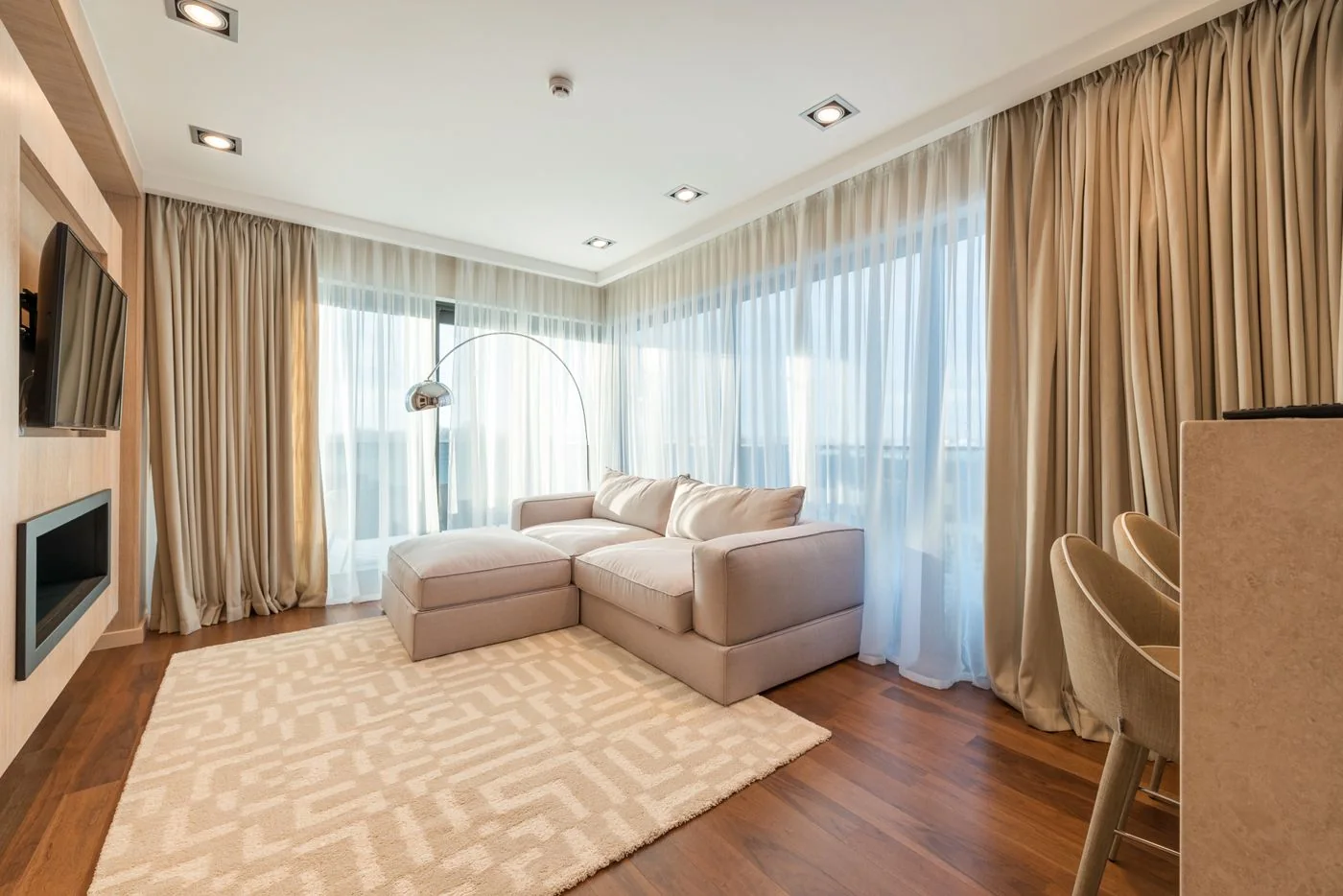
Living room with an upholstered sofa, rug and curtains. Illustrative photograph, not an acoustic absorption test. Max Vakhtbovych / Pexels, Pexels License.
The room looks calm. Then somebody speaks and it sounds as if the walls have joined the conversation. A clean, sparsely furnished interior can be visually pleasant but tiring to listen to.
To reduce room echo, first identify whether the problem is sound bouncing inside the room or noise arriving from outside. Those are different jobs. A rug may soften the first problem; it will not turn your apartment into a recording studio or silence the neighbour’s bass.
Echo, reverberation and soundproofing are not interchangeable
A distinct returning sound is an echo; overlapping reflections produce the lingering sound we call reverberation. ROCKWOOL’s acoustics explanation distinguishes absorption within a space from blocking transmission between spaces. It is a manufacturer’s technical resource, not an independent test of your living room.
Translate that distinction into a shopping question: “Am I trying to make conversation clearer here, or stop sound crossing a wall?” Do not buy a product labelled “acoustic” until you can answer it.
Listen before rearranging anything
Choose the place where the problem actually matters: the dining chair, desk or sofa. Speak a few ordinary sentences and listen to what happens when you stop. Repeat from another position. A gentle clap can reveal lingering reflections, but this informal check is not a calibrated acoustic measurement.
Write down the difficulty in plain language: “Calls sound hollow at the desk” is more useful than “the whole apartment is wrong”. Keep the same speaking position when comparing changes. Different phone microphone processing can make recordings misleading.
Use furnishings you would want anyway
Before buying panels, consider a rug suitable for the floor, curtains that fit the window and upholstered seating that fits the room. ROCKWOOL’s home guide discusses sound-absorbing furnishings. Results depend on the materials, their area and the room; there is no honest universal percentage improvement to promise here.
For a dining room, try the change near the conversation area rather than adding cushions to a distant corner. Keep rugs flat and safely secured. Curtains must not cover heaters, vents or exits. A practical improvement should not create a daily maintenance or safety problem.
A rental-friendly comparison plan
- Pick one seat and one short spoken passage.
- Note the room’s current furnishings and open doors.
- Make one reversible change with something you already own.
- Listen again in comparable conditions.
- Keep the change only if it improves the experience and suits everyday use.
This is a decision aid, not an experiment we have performed. Ask another household member to listen too. If the difference is unclear, avoid spending more simply because the room now looks “treated”.
When an acoustic panel makes sense
If speech still lingers and the room is difficult to furnish, a properly specified absorber may be worth considering. Ask the supplier about tested absorption, installation, fire performance and suitability for your setting. Decorative slats and a persuasive product photograph are not the same as a performance report.
Get permission before attaching anything in a rented home. Do not improvise exposed insulation or suspend heavy panels above seating. Professional advice is especially useful where privacy, building alterations or accessibility requirements matter.
Keep the calm design, without filling every corner
You do not need to cover the room in foam or abandon a restrained interior. Choose a few useful changes and preserve circulation. For the visual side, see soft arches in modern Mediterranean design; for desk organisation, see cable management without drilling.
Quick questions
Will a rug stop neighbour noise? Do not rely on it for sound isolation through walls or for low-frequency noise.
Can a phone app certify the result? Not this informal comparison. Certification requires an appropriate method and equipment.
What is the best first purchase? None until you have identified the problem. The walls can wait for their turn to speak.
Image and usage credit
Living room with an upholstered sofa, rug and curtains. Illustrative photograph, not an acoustic absorption test. Max Vakhtbovych / Pexels · Pexels License Resized and converted to WebP; use does not imply the photographer’s endorsement.