Is Stevia Healthy? Safety, Sweetener Blends and Weight-Loss Claims Explained
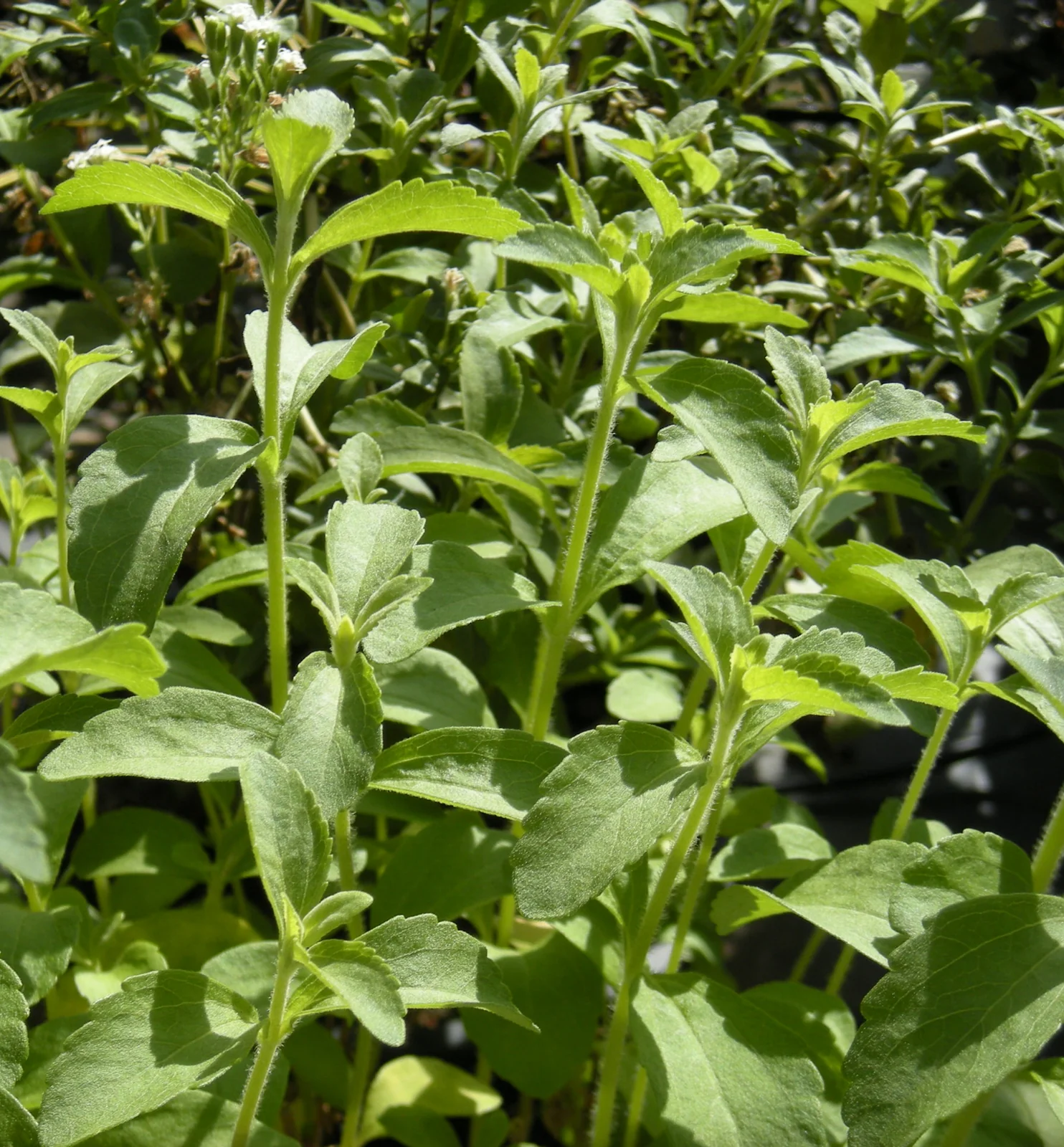
Stevia plant foliage, not purified extract and not a recommendation to consume raw leaves. Ethel Aardvark / Wikimedia Commons, CC BY 3.0.
- First, which “stevia” are we talking about?
- What does the daily intake limit actually mean?
- Why does WHO advise against sweeteners for weight control?
- Read the whole label, not the green word on the front
- Can a stevia product cause bloating?
- A practical way to decide whether you need it
- Questions worth asking before buying
- Does “natural” mean it is automatically healthier?
- Does replacing sugar guarantee weight loss?
- Is every stevia product interchangeable?
- Image and usage credit
Stevia sits in an awkward place on the supermarket shelf: it promises sweetness without sugar, but the word “natural” often does more work than the ingredient label. Is it a sensible swap, or another health claim worth questioning?
The short answer: high-purity steviol glycosides can be used as a sugar alternative within their permitted conditions of use. That does not make stevia a health supplement, prove that it causes lasting weight loss, or make every product carrying its name a healthy choice. The form of stevia, the rest of the ingredients and your reason for using it all matter.
This guide separates food-safety assessments from nutrition advice. Sources were checked on 6 October 2026. It is general educational information, not individual medical advice.
First, which “stevia” are we talking about?
Three different things can share the name: the plant and its leaves; concentrated, purified steviol glycosides; and a finished sweetener or food containing those glycosides alongside other ingredients. They should not be treated as interchangeable.
The US Food and Drug Administration has not questioned GRAS determinations submitted for certain high-purity steviol glycosides under their intended uses. This is not blanket FDA approval of anything labelled stevia. Whole leaves and crude extracts are not permitted as sweeteners in the US; rules elsewhere may differ.
A leaf on the packaging is therefore not enough information. Nor is a homemade leaf infusion equivalent to a standardized purified ingredient. The photograph accompanying this article shows the plant, not a recommendation to consume raw leaves.
What does the daily intake limit actually mean?
The European Food Safety Authority’s 2024 review retained an acceptable daily intake of 4 mg per kilogram of body weight, expressed as steviol equivalents. For a hypothetical 70 kg adult, that is 280 mg of steviol equivalents—not 280 mg of sweetener powder.
You cannot reliably convert that number into teaspoons or packets without the product’s composition and the relevant conversion information. Different glycosides and blends are not identical. The FDA explains an acceptable daily intake as an amount considered safe to consume daily over a lifetime. It is a safety benchmark, not a target to reach or a recommended supplement dose.
Why does WHO advise against sweeteners for weight control?
The WHO’s 2023 guidance advises against relying on non-sugar sweeteners, including stevia derivatives, for weight control or reducing noncommunicable disease risk. This is a conditional recommendation, with limitations in the long-term evidence; observed associations do not establish that stevia causes disease. The recommendation excludes people with pre-existing diabetes.
That guidance addresses nutrition strategy, not whether permitted extracts become toxic at ordinary approved use. Replacing sugar in one drink and achieving a lasting change in overall diet are different questions. It is possible for an ingredient to have a defined safety assessment without being an effective long-term weight-management strategy.
Read the whole label, not the green word on the front
Imagine two hypothetical products: a sweetener intended for one cup of tea and a large dessert advertised as “with stevia.” The first is a substitution; the second is still a dessert with its own portion size and ingredients. Neither label tells you the complete nutritional story.
- Identify the ingredient: does the list specify steviol glycosides, or provide only a vague front-of-pack claim?
- Check the serving size: compare products using equivalent amounts, not a tiny manufacturer serving against a whole portion.
- Read energy and carbohydrate information: do not assume the finished food has none just because stevia appears in its name.
- Look at the other ingredients: a blend is not the same as the concentrated sweetener on its own.
- Ask what changes: are you replacing added sugar, or simply adding another sweet product to your routine?
For context on another common packaging shortcut, see our guide to brown sugar versus white sugar.
Can a stevia product cause bloating?
Start with the ingredient list rather than blaming the plant automatically. If a blend contains sugar alcohols, those are a separate ingredient group. The FDA’s sugar-alcohol factsheet notes that incomplete absorption can cause gas, bloating or diarrhoea in some people. That does not establish the same effect for purified steviol glycosides.
If a product repeatedly bothers you, stop using it and discuss persistent symptoms with a clinician. Keep its packaging: knowing the exact ingredients and amount consumed is more useful than reporting “I tried stevia.” Do not keep escalating the quantity simply because it has a healthier-looking label.
A practical way to decide whether you need it
Begin with one specific habit, not a promise to overhaul your diet overnight. If you enjoy sweet tea, consider whether you prefer a smaller amount of sugar, a less sweet drink, or a labelled sweetener used as directed. Stevia is an option, not an obligation.
Buy a small pack before committing to a large supply. Check whether you enjoy the taste in the actual drink you make. In baking, follow a recipe written for that particular product; matching sweetness is not necessarily the same as replacing the volume and function of sugar. Do not invent a universal spoon-for-spoon conversion.
For diabetes, pregnancy, children or an ongoing medical condition, seek advice appropriate to the person and product rather than borrowing an adult calculation from an online article. A sweetener is not a substitute for treatment or a complete eating plan.
Questions worth asking before buying
Does “natural” mean it is automatically healthier?
No. The useful questions are what the ingredient is, how much is used and what else the product contains. Plant origin alone cannot answer them.
Does replacing sugar guarantee weight loss?
No. Avoid products or advice that turn a single ingredient substitution into a guaranteed outcome. Your overall eating pattern still matters.
Is every stevia product interchangeable?
No. Keep the label, follow the product’s directions and avoid translating an intake figure into packets without the necessary composition data.
The bottom line: think of stevia as a possible sweetening tool, not a shortcut to health. A clear label and a modest, specific purpose are more useful than a reassuring leaf printed on the box.
Image and usage credit
Stevia plant foliage, not purified extract and not a recommendation to consume raw leaves. Ethel Aardvark / Wikimedia Commons · CC BY 3.0 Resized and converted to WebP; use does not imply the creator’s endorsement.