How to Choose a Living-Room Rug: Size and Placement Before Pattern
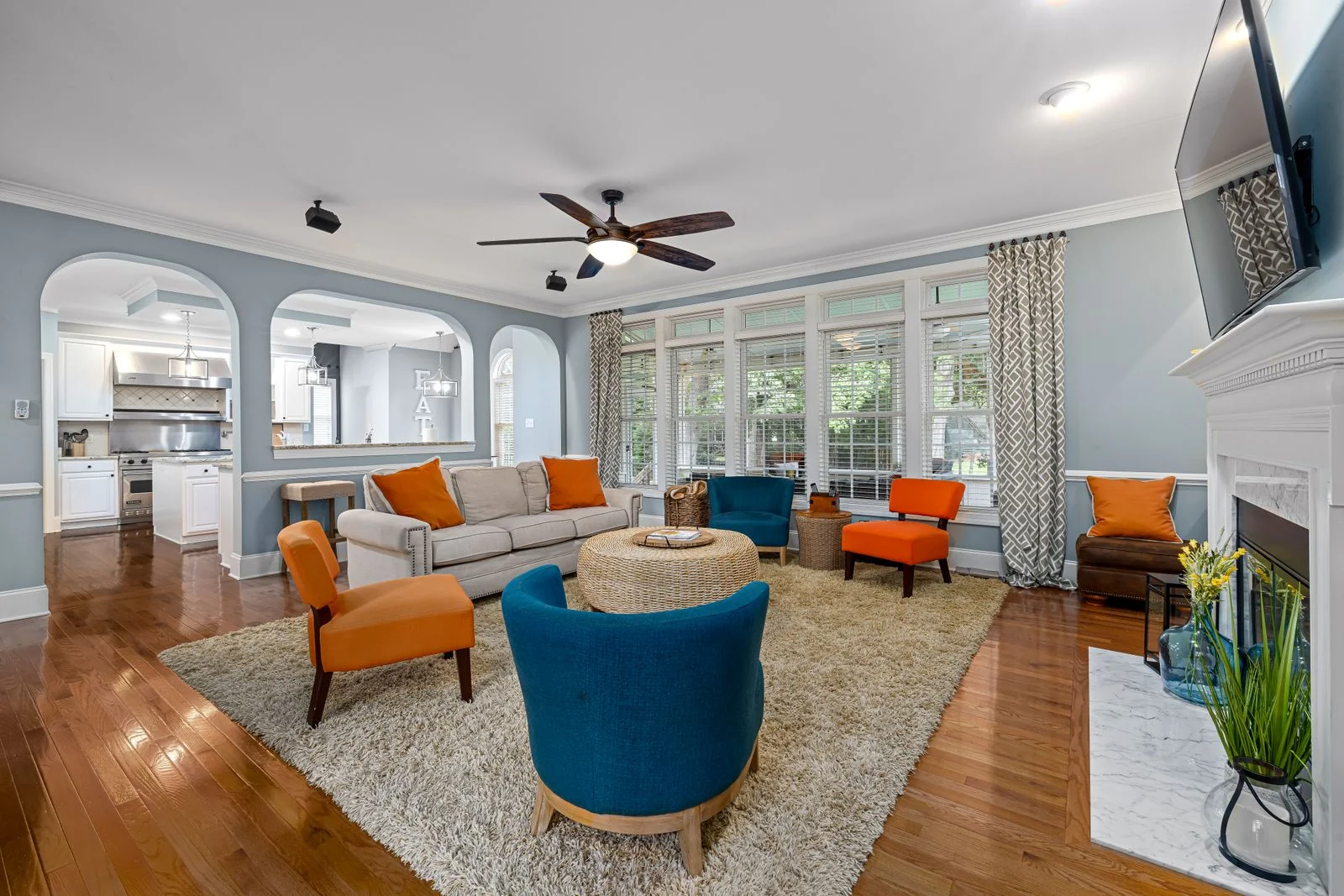
A pale rug connects a seating group; an illustration, not a ready-made measurement for your home. Curtis Adams / Pexels, Pexels License.
- Decide what the rug is doing
- Make a floor plan that includes the inconvenient details
- Test two sizes before comparing twenty patterns
- Compare three placement options
- Choose for cleaning, movement and the people using it
- Choose colour in your room, not only on a screen
- Use a shortlist you can actually compare
- Image and usage credit
A rug can look perfect in a shop and strangely stranded when you bring it home. The colour matches, the pattern is lovely—and somehow the sofa, chairs and coffee table still seem unrelated. Often the missing decision is not style. It is the area the rug is supposed to bring together.
To choose a living-room rug, start with the seating arrangement, test its footprint and check everyday practicality before choosing a pattern. This guide helps you build a shortlist without treating one fashionable size as a rule for every home.
Decide what the rug is doing
Is it connecting a sofa and two chairs, defining a seating zone in an open-plan room, or making a small reading corner comfortable? Those are different jobs. A rug beneath a coffee table alone may be intentional; it is less convincing when you expected it to connect an entire seating group.
IKEA’s rug-size guide offers furniture-based layouts rather than one compulsory room size. Use those arrangements as options to compare, not measurements to copy into a room you have not measured.
Make a floor plan that includes the inconvenient details
Measure the room, then sketch the actual furniture positions. Mark doors, door swings, radiators, floor vents and the routes people use. Include the chair that gets pulled forward for visitors, not just the arrangement you tidy for a photograph.
Record the available length and width for the rug separately from the room dimensions. In an open-plan room, the sitting zone may be much smaller than the floor as a whole. If you are still moving furniture around, work through our small living-room layout guide first.
Test two sizes before comparing twenty patterns
Choose two plausible rug footprints and mark their corners temporarily. Use floor-safe markers or paper; test any removable tape on an inconspicuous area and remove it after the exercise. Walk around, sit down and move your usual chair. Does the outline end in an awkward place?
Here is a hypothetical comparison, not a universal sizing recommendation: a 160 × 230 cm rug covers 3.68 square metres; a 200 × 300 cm rug covers 6 square metres. The second has 2.32 square metres more area. That difference deserves an actual floor test, not an assumption that the two sizes are almost interchangeable.
Photograph both outlines from the doorway, using the same position. Ask which one connects the furniture and still leaves sensible circulation. Do not calculate “the correct rug” from room area alone.
Compare three placement options
- Furniture fully on: test whether all intended pieces fit comfortably without pushing the rug into doors or circulation routes.
- Front legs on: check the sofa and chairs together, including whether any piece becomes unstable with legs at different levels.
- Furniture off: use this deliberately for a smaller accent area, rather than expecting a coffee-table rug to connect every seat.
None is an obligation. Your furniture, available sizes and daily movement determine what works. A staged room can suggest an idea; it cannot tell you how your particular chair behaves on a thick edge.
Choose for cleaning, movement and the people using it
Before comparing fibre names, ask practical questions: can your vacuum handle the construction? Will crumbs collect where you eat? Can a door clear the combined rug and underlay? If a wheelchair, walker or walking stick is used, assess the surface and edges with the person using them rather than buying from appearance alone.
Lowe’s rug guide distinguishes grip and cushioning pads and highlights combined thickness and door clearance. Check that any pad is compatible with your flooring and the rug; the word “non-slip” is not permission to ignore the floor manufacturer’s care instructions.
Read the exact cleaning label. “Washable” is useful only if the required method, rug size and your equipment fit together. Ask how it should dry and what professional cleaning would cost locally. Do not assume every rug made from the same fibre has identical care requirements.
Choose colour in your room, not only on a screen
Request a sample if one is available. Place it beside the sofa and flooring in daylight and in your normal evening light. A neutral rug can still clash if its undertone looks different beside your walls.
For a patterned choice, decide what gets to be the focal point: the rug, colourful seating or art. You do not have to make everything quiet, but you should choose where attention goes. See our living-room lighting guide if evening light keeps changing your impression of the room.
Use a shortlist you can actually compare
- Exact size, checked against the marked footprint.
- Placement choice and any furniture-level issue.
- Rug and pad compatibility, with total thickness.
- Cleaning instructions and realistic maintenance.
- Total cost including delivery, pad and any returns.
- Colour checked against existing surfaces, not memory.
The best rug is not automatically the largest or most expensive. It is the one that brings the intended area together while remaining easy to live with. Make the floor test first; then let yourself enjoy choosing the pattern.
Images are illustrative, not product endorsements or before-and-after tests. Both photographs were resized and converted to WebP under the Pexels License.
Image and usage credit
A pale rug connects a seating group; an illustration, not a ready-made measurement for your home. Curtis Adams / Pexels · Pexels License Resized and converted to WebP; use does not imply the creator’s endorsement.