Why Can You Still Hear Voices Through Noise-Cancelling Headphones?
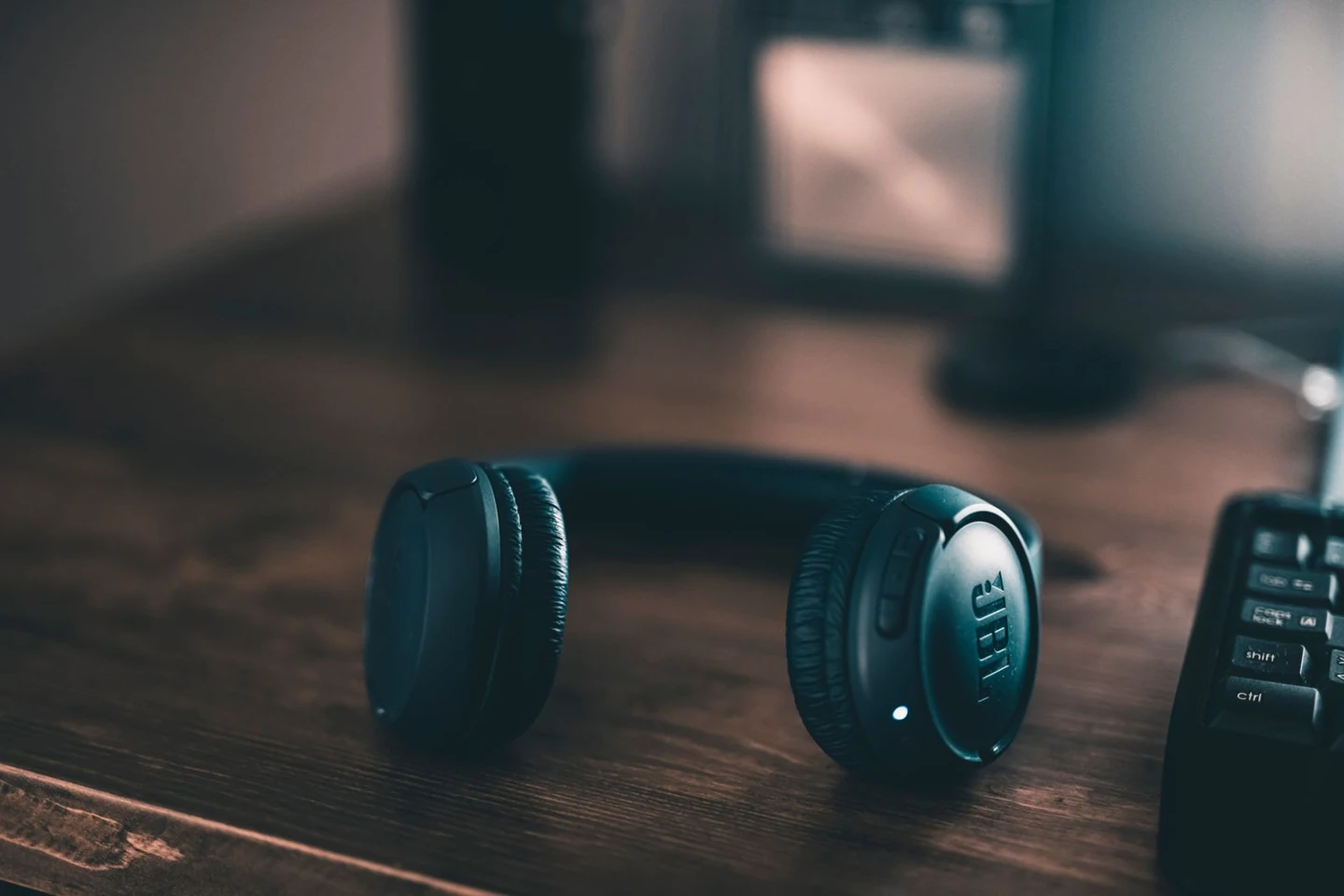
Headphones on a desk in soft light. Illustrative photograph: Zafer Erdoğan / Pexels; not a performance test or confirmation of the pictured model's features.
- What are the headphones actually doing?
- Why does the hum fade more than the conversation?
- Check the fit before blaming the electronics
- Is cancellation on—or are you letting the room in?
- Try a short comparison instead of chasing total silence
- What about the noise other people hear during your calls?
- If performance suddenly changes, check what you can verify
- One important limit: ANC is not permission to ignore hazardous noise
- Buy for a problem, not a word on the box
- Photographs and sources
You press the noise-cancelling button, and the air-conditioning hum seems to retreat. Lovely. Then someone nearby starts talking—and you can still understand them. Is the headset faulty, or did “noise cancellation” promise more than it could deliver?
Active noise cancellation reduces some unwanted sound; it does not build a silent room around your head. Understanding the difference between a physical seal, electronic cancellation, and microphone noise reduction can help you get more from the headphones you already own. This is an explainer and a practical settings check, not a laboratory review of a particular model.
What are the headphones actually doing?
There are two layers. Passive isolation comes from the physical design and fit of the earcups or ear tips. It does not, by itself, require electronic processing. Bose explains this distinction between blocking and cancelling sound. That is why an ANC label cannot describe the whole listening experience.
Active noise cancellation adds microphones and processing that produce an opposing signal to reduce noise at your ears. Jabra's technical explainer describes the principle as destructive interference. This is different from turning music up to cover the noise, and it does not remove sound from the room for everyone else.
Imagine your neighbor asking whether the room just got quieter. It did not. What changed was the sound reaching you while you wore the headphones.
Why does the hum fade more than the conversation?
Sony's support guidance explains that noise cancellation is particularly effective in lower-frequency ranges associated with transport and air conditioning, and less effective for some higher-frequency sound, including parts of human speech. Not every sound presents the same challenge.
A steady drone may recede while a nearby sentence remains intelligible. Hearing a voice is not, on its own, proof of a fault. That does not mean every disappointing result is normal, either. Compare different kinds of sound rather than judging everything by “I can still hear something.” Results vary with the model, fit, and surroundings.
Check the fit before blaming the electronics
With in-ear models, the tip size may not suit you. Apple's AirPods Pro ear-tip guide explains the importance of a comfortable acoustic seal and notes that your ears may need different sizes. Fit-test names and steps vary by model and software; use your device's instructions rather than searching for a button it may not have.
For headphones, check the manufacturer's wearing guidance and whether the cushions sit comfortably and consistently. Do not clamp them painfully or compensate for a poor fit by turning the audio up. If wearing them hurts, winning a noise-cancellation comparison is not the goal: take them off and reassess comfort.
Is cancellation on—or are you letting the room in?
Some headphones have a mode designed to admit surrounding sound, with names such as Aware or Transparency. Bose describes Aware mode as one example. Treat playback and noise-control mode as separate settings: pausing a song is not the same as switching ANC off.
Read the mode label in the app or listen to its announcement instead of relying on an icon color you remember. If your model offers automatic or adaptive behavior, read what it does in that device's manual. Changing five settings at once makes it difficult to work out which one mattered.
Try a short comparison instead of chasing total silence
This is a suggested personal observation exercise, not a decibel measurement or a hearing-protection test. Sit somewhere safe and use ordinary sounds already present. Do not create loud noise or ask someone to shout.
- Pause your audio. Keep music and podcasts stopped so they cannot mask the difference. ANC can work without music on supported devices, as the Bose explanation linked above notes.
- Choose two everyday sounds. Try a distant, already-running appliance hum and ordinary speech from a willing helper. Do not move close to dangerous machinery or another hazardous sound source.
- Change one mode. Compare ANC with cancellation off if your device allows it. If you use an ambient mode instead of off, record that distinction.
- Write a plain-language observation. “The hum is much softer; speech remains understandable” tells you more than “the cancellation is bad.”
- Repeat after adjusting fit. Keep the location, distance, and other settings unchanged. Stop if the exercise becomes uncomfortable.
The point is to discover where the device helps you. It might make reading more pleasant without turning a crowded table into a suitable place for a sensitive meeting. You do not need an invented performance chart to make that judgment.
What about the noise other people hear during your calls?
That is a separate job. Jabra's explanation of headset noise reduction distinguishes reducing what the wearer hears from reducing the background picked up by a microphone for the caller. Doing one well does not prove the other works equally well.
If meetings are your problem, arrange a short practice call with a willing helper. Ask specific questions: Is your voice intelligible? Is the background distracting? Do not record anyone without permission, and do not treat the quiet sound in your own ears as a microphone review.
If performance suddenly changes, check what you can verify
- Confirm the current mode. Are you still using ANC, or has another mode taken over?
- List what changed. A replacement tip, wearing position, or automatic setting gives you a specific factor to check. Change one thing at a time.
- Follow your model's instructions. Use the manufacturer's guidance for cleaning, battery checks, and available updates. Do not insert tools into microphone openings or dismantle the headphones.
- Describe the issue to support. Include the model, mode, when the change began, and whether only one side is affected. Specific observations are more useful than “it stopped cancelling.”
One important limit: ANC is not permission to ignore hazardous noise
NIOSH warns that electronic noise cancellation alone does not make consumer headphones hearing protection; appropriate protective labeling and suitability matter. Do not replace required hearing protectors around equipment with ordinary listening headphones or test cancellation using harmful sound.
No listening mode is a reason to ignore traffic or warnings. Make comparisons in a safe place, and keep playback low and comfortable rather than repeatedly turning it up to overpower whatever remains.
Buy for a problem, not a word on the box
Before buying anything, finish one sentence: “I want less cabin hum,” “I need clearer meeting audio,” or “I want something comfortable for reading.” Then consider fit, controls, and the seller's actual trial or return terms—not a promise of complete silence.
Your next useful step may simply be changing a tip or a mode. If your phone is also your daily work tool, our guide to clearing storage without sacrificing photographs tackles another everyday frustration. Useful technology is not always about adding specifications; sometimes it is about understanding the limits of what you own.
Photographs and sources
The photographs illustrate headphone design; they are not product tests or proof that each pictured model has ANC. Cover: Zafer Erdoğan / Pexels. Inline photographers are credited beneath their images. All are used under the Pexels License, without implying endorsement by photographers or pictured brands. Official technical sources are linked beside the explanations they support.
Image preparation was limited to proportional resizing and WebP conversion, preserving the full frames; no elements were generated or product designs changed. Both language versions use the same photographs, with creator and license links above.