
Build an Honest Freelance Design Portfolio with AI: Show Your Work, Not Invented Results
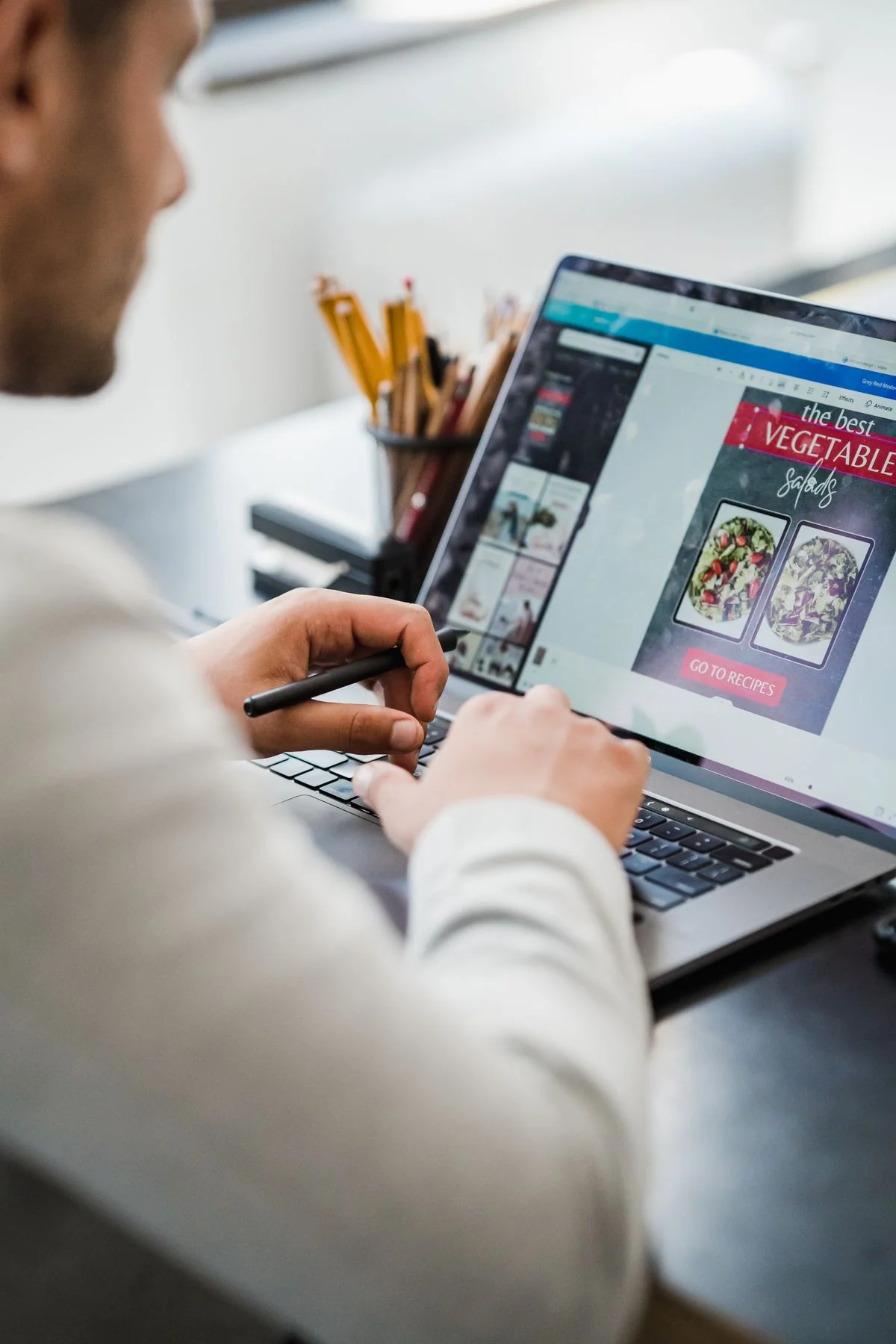
A man working on a design at his laptop; a licensed illustration, not a project created by Dajran. Mizuno K / Pexels, Pexels License.
- Start with the service, not the portfolio platform
- No clients yet? Make the project type unmistakable
- A case study should show decisions, not just decoration
- Give AI a bounded job
- Protect the information behind the project
- Publish a small version and test it on a phone
- A final checklist before sharing your link
- Image and usage credit
A portfolio full of polished pictures can still leave a client with one unanswered question: what did you actually do? AI makes that gap easier to hide, but it also gives a beginner a useful assistant for organising genuine work. The aim is not to look like an agency with fifty clients. It is to show a small number of decisions you can explain and work you can honestly deliver.
This guide is for freelance designers building their first portfolio or cleaning up an existing one. The examples are proposed exercises, not projects we have tested with paying clients. No portfolio format guarantees work.
Start with the service, not the portfolio platform
Write one sentence describing the job you want: “I design bilingual menus and small print materials for local businesses,” for example. Now choose work that supports that sentence. A beautiful illustration may be worth showing, but it does not demonstrate that you can prepare a readable menu with consistent prices, Arabic alignment and a print-ready file.
Begin with three complementary projects: one showing your strongest finished work, one explaining a practical problem, and one demonstrating a useful constraint such as a small screen or two languages. Three is a manageable starting point, not a hiring rule. Remove a weaker project if it merely repeats another. Make your contact details and the service you offer easy to find.

No clients yet? Make the project type unmistakable
You can create a self-initiated project without pretending a company commissioned it. Label it “Self-initiated concept; not commissioned or launched.” Use a fictional business rather than suggesting a real brand hired you. A practice project can show judgement; a made-up testimonial only damages that evidence.
For a fictional neighbourhood café, set a brief: a two-page Arabic–English menu, clear section headings, readable prices and a version that works on a phone. Use invented sample products and clearly mark them as examples. Explain which deliverables you completed and which remain proposals. Do not describe a mock-up as a functioning website or a printed sample as a full production run.
A case study should show decisions, not just decoration
Use the following structure for each project. Readers should be able to skim it, then inspect the details if your work fits their needs.
- Context: Who is it for, what needs improving, and is it a real commission or a concept?
- Your role: What did you do, and what did collaborators or supplied assets contribute?
- Constraints: Name the actual format, language, deadline or content limits.
- Decisions: Show two or three choices and explain the alternatives you rejected.
- Deliverables: Include close-ups that make text, spacing and practical details visible.
- Evidence and limits: State what was checked and what has not been measured.
In the café exercise, a useful decision might be placing prices in a consistent column rather than scattering them beside long dish names. Show the earlier layout and the revision. “The final file contains separate Arabic and English versions” is verifiable. “Sales increased by 40%” is not acceptable unless real records support it and you have permission to publish them. Without testing, write “customer testing has not been carried out,” not “customers loved it.”
Give AI a bounded job
AI can help turn your notes into an outline, spot vague sentences or suggest questions your case study has not answered. Keep the design judgement and fact checking with you. NIST’s generative-AI risk profile describes the risk of confident but false output. In a portfolio, that can mean an invented client, a fabricated result or a tool name you never used.
Try this prompt with notes that contain no confidential material:
Turn these verified project notes into a concise portfolio case study. Do not invent clients, dates, results, testimonials or metrics. Keep my role and any AI assistance explicit. Mark missing evidence as [verify]. Organise the draft into context, constraints, decisions, deliverables and limitations.
Compare every sentence with your project files. Replace inflated language such as “revolutionary brand transformation” with the actual change. If AI supplied an image, say that the image was generated and identify the work you did around it. Do not present a generated product photograph as evidence that you manufactured the product.
Protect the information behind the project
Before uploading notes to any AI tool or public portfolio, remove client contact details, private budgets, unpublished plans and access credentials. Anonymising a name is not enough if the remaining document identifies the client. Check what the client permits you to publish and what the chosen tool’s current terms allow. When uncertain, work with a fictional brief or ask permission; do not assume that receiving a file gives you permission to redistribute it.
Keep an asset record: creator, source link, usage terms and modifications. Distinguish your original work from fonts, photographs, templates and collaborators’ contributions. That record also makes it easier to replace an image later without losing its credit.
Publish a small version and test it on a phone
You do not need a complex website to start. A simple page, a readable PDF or a project platform can work if the content is clear. Behance’s official project guide explains how to add content, set a cover and title, and save a draft or publish. Platform choice is secondary to showing the right work.
Open your portfolio on a phone without logging in. Can you read the text without zooming? Do images load? Is the project type obvious? Can someone contact you? Ask a friend to explain what you offer after a quick look. If they say “something creative,” your opening sentence probably needs tightening.
A final checklist before sharing your link
- Every project has a clear role and project-type label.
- Claims match records; missing measurements are acknowledged.
- AI-generated assets and substantive AI assistance are identified.
- Credits, permissions and contact links have been checked.
- The strongest work comes first and looks readable on mobile.
- The portfolio offers a specific service, not a wall of unrelated pictures.
If your project brief is still vague, start with our guide to using AI to organise a design brief. Then build one case study around a real decision. A modest portfolio that can survive a client’s questions is more useful than an impressive one that cannot.
Image and usage credit
A man working on a design at his laptop; a licensed illustration, not a project created by Dajran. Mizuno K / Pexels · Pexels License Resized and converted to WebP; use does not imply the creator’s endorsement.


What do you think?
Share your thoughts or experience. Keep the conversation kind and on topic.
Participation Rules
نريدك أن تكون مصدرًا لزملائك من القراء ونأمل أن تستخدم قسم التعليقات لإجراء ذلك. لقد صممناها لرفع وتوسيع الاستجابات الأكثر ذكاءً وإدانةً ، وتقليل أو إخفاء الأسوأ. هذه هي قواعد الطريق:
ابقى في صلب الموضوع
عند تقديم تعليق ، لا تخرج عن الموضوع. لا تعلق على المعلقين الآخرين أو معتقداتهم السياسية المفترضة. ناقش مزايا القصة نفسها. لا تنشر تومي. هذا ليس المكان المناسب لصق فصل من رسالتك (أو أي شخص آخر) أو ورقة بيضاء.
أظهر الإحترام.
نحن نشجع ونقدر النقاش العميق. ما عليك سوى التأكد من أنه عندما لا تتفق مع فرضية القصة أو أي معلق آخر ، فإنك تفعل ذلك بطريقة محترمة ومهذبة.
كن مهذبا وحافظ على نظافته
نحن نغطي التكنولوجيات الجديدة موقعنا ليس منفذاً للفظاظة. نحن لا نتسامح مع الإهانات الشخصية ، بما في ذلك استدعاء الأسماء أو العنصرية أو التمييز الجنسي أو الكلام الذي يحض على الكراهية أو الفحش. هذا يعني أنه لا توجد أي ملاحظات بذيئة أو مسيئة أو مضايقة أو تنمر. إذا لم تكن مدنيًا ومهذبًا ، فلا تنشره.
تجاهل المتصيدون
أفضل رد على القزم - شخص ما يتكرر عدائيًا واستفزازًا - ليس ردًا. من فضلك لا تشجع السلوك السيئ عن طريق الاستجابة ؛ انها لا تخدم سوى لسرور المتصيدون والبيض عليها. إذا كان هناك شخص ما يسيء استخدام موضوع مناقشة ، فأبلغ عن أي تعليقات مسيئة ، وسنتناول الموقف.
كن مسؤولاً وأصيلاً
انشر آرائك فقط بكلماتك الخاصة. أنت مسؤول عن المحتوى الذي تنشره.
لا تنشر رسائل غير مرغوب فيها أو إعلانات
إذا لم يكن لديك عقد إعلان معنا ، فإن هذا الموقع الإلكتروني ليس عبارة عن لوحة إعلانات لنشاطك التجاري. لا تنشر محتوى غير مرغوب فيه أو محتوى ترويجي ذاتي أو حملات إعلانية. لا ضغط أو تجنيد أو استجداء.
نقرأ التعليقات
على الرغم من أن مجالس مناقشاتنا لا تخضع للإشراف الرسمي ، إلا أننا نولي اهتمامًا وثيقًا بها. نحتفظ بالحق في تعديل أو حذف التعليقات التي لا تلبي معاييرنا.
نحن نحظر الأعضاء الفاضحين
إنه ليس شيئًا نتمتع به. ولكن عند الضرورة ، سنحظر الأعضاء الذين لا يلتزمون بهذه الإرشادات.
شكرا على اتباع هذه المبادئ التوجيهية.