
Why Badminton’s Shuttle Slows So Fast—and How to Enjoy Your First Game
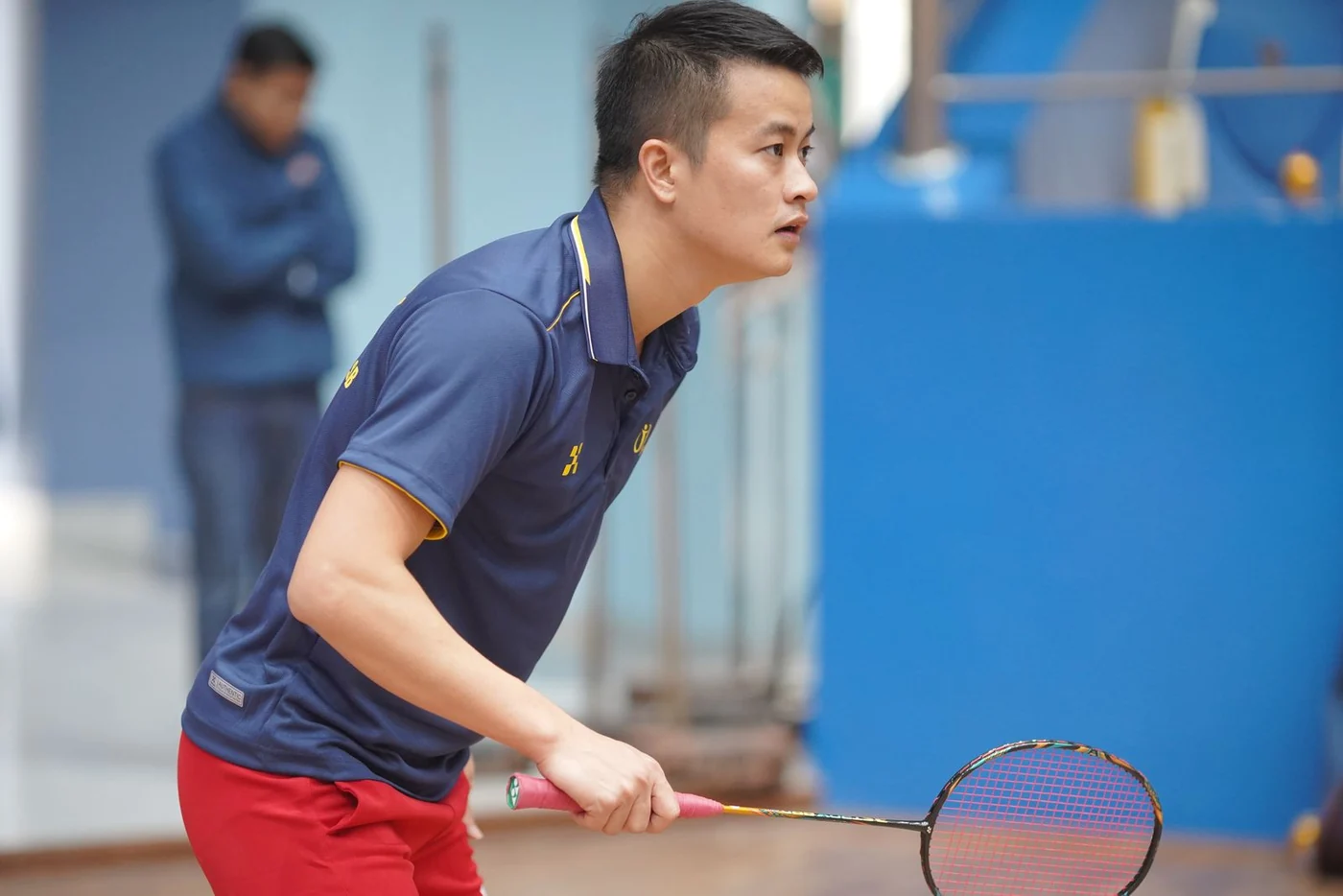
An indoor badminton player, photographed by Lê Đức via Pexels. Illustrative photo; not our field test or the player’s endorsement.
- Why doesn’t the shuttle behave like a ball?
- What does recent research tell us?
- What do you need before buying anything?
- Three rules that help a match make sense
- Make your first session a small experiment, not an exam
- Three thoughts that can spoil the fun
- Quick questions before you pick up a racket
- Is a plastic shuttle the same as a feather shuttle?
- Do I need a full match to enjoy the game?
- What counts as a successful first session?
- Research and image credits
A shuttlecock hardly looks like the beginning of an exciting sport: a small base, a delicate skirt, and a racket that feels remarkably light. Then you start playing. The shuttle lands somewhere you did not expect, and your hardest hit turns out not to be your smartest one. Welcome to badminton, a game in which a tiny object makes the air part of the action.
The short answer: a shuttle does not fly like a tennis ball. Its shape creates substantial air resistance, so it loses speed sharply. Understanding that twist makes a match more interesting to watch—and your first game less mysterious. You do not need professional equipment or a memorised rulebook to enjoy a simple exchange with a friend.
Why doesn’t the shuttle behave like a ball?
Think about a crumpled piece of paper compared with the same sheet opened out: how it meets the air changes its movement. That is an analogy, not an exact shuttlecock model. In badminton, the open, cone-shaped skirt is more than decoration. It helps shape what happens in flight.
A 2012 aerodynamics study examined airflow in a wind tunnel and found that the gaps between feathers influence drag. Closing those gaps in the test model reduced resistance. The shuttle’s structure, not simply the strength of the player’s arm, helps explain its rapid slowdown.
That gives the game an appealing contradiction: a shot can look blisteringly fast, yet the shuttle does not continue across the court like a projectile maintaining its starting speed. Badminton is not only about who hits hardest. Choosing a space and a moment matters, too. The object itself makes brute force an incomplete plan.
What does recent research tell us?
In Eric Collet’s 2026 study, high-speed filming of advanced players showed sharp feather-shuttle slowdown after smashes. Plastic shuttles behaved differently and could deform at high speeds.
The takeaway: launch speed is not speed throughout the flight. These measurements concern specific conditions, not a formula for predicting every garden shot. You can enjoy the idea without memorising equations or copying professional records.
During a gentle exchange, try noticing something simple: did you judge the landing spot from the sound of the hit, or did you follow the flight? This is an observation prompt, not a scientific test. If you miss several returns, do not immediately conclude that you need a more expensive racket. You may simply need time to get acquainted with an object that refuses to behave like a ball.
What do you need before buying anything?
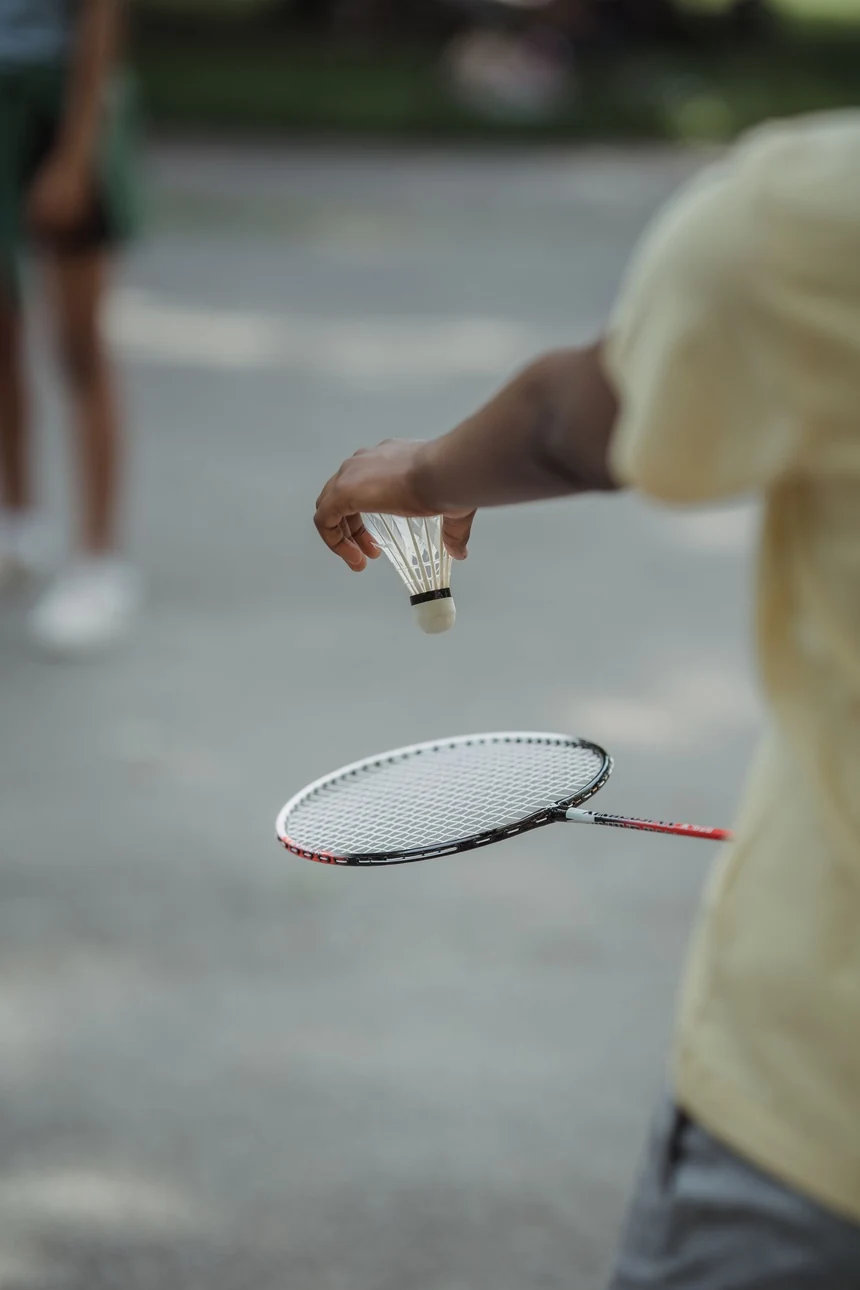
Start with two practical questions: where will you play, and who will join you? If a nearby facility lends rackets, one session there might be more useful than buying a set you have not tried. Ask what equipment is available and whether beginners can join before booking. Do not assume a particular service or price.
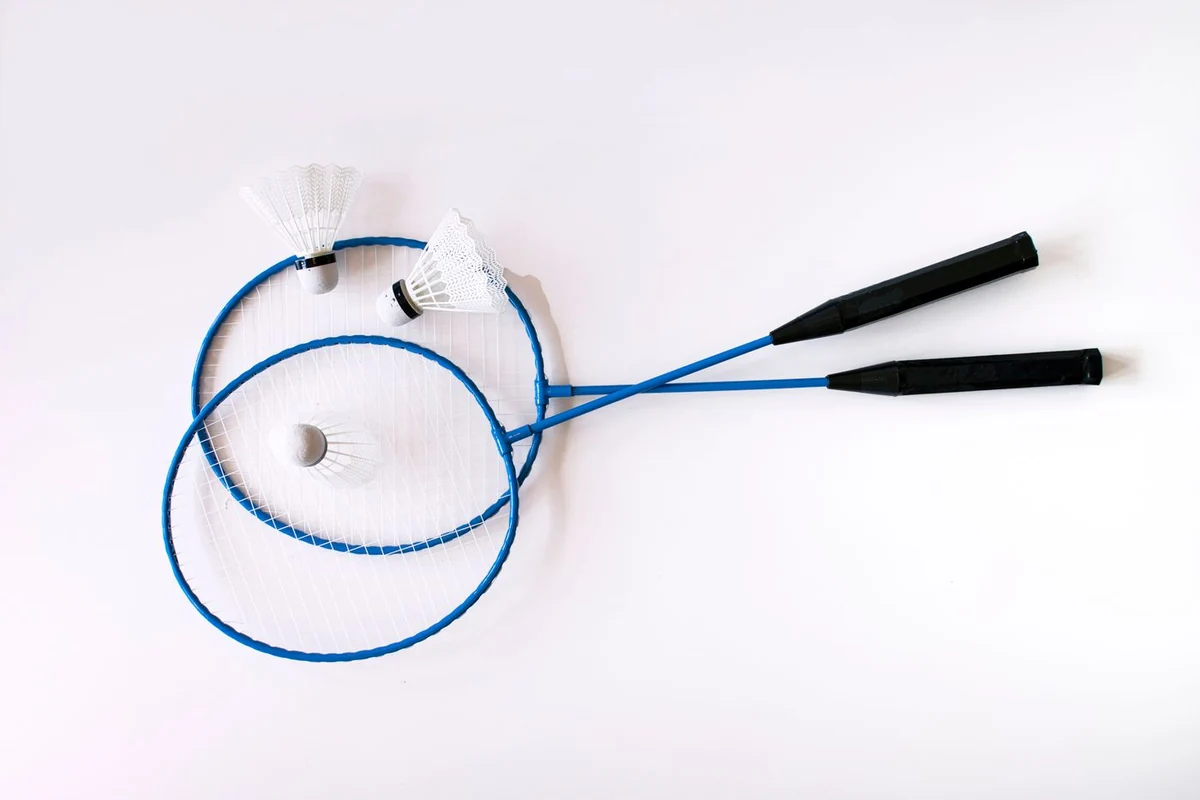
- Two rackets and a suitable shuttle: choose equipment you can try comfortably. Ask a coach or venue staff member for help if you are unsure; a particular brand should not be your entry requirement.
- A clear space: dry footing and room for both movement and racket swings, away from faces, furniture, and traffic. A slippery surface is not a shortcut to a good game.
- A partner interested in playing, not showing off: agree to start gently. One spectacular smash cannot replace ten useful opportunities to learn the timing.
Outdoor play can be a casual introduction, but wind may turn the experience into chasing the shuttle rather than learning its flight. If a gust changes its direction, not every missed return is your mistake. For a proper introduction to court boundaries and match play, choose a space set up for badminton.
Three rules that help a match make sense
In court badminton, the shuttle is not allowed to bounce before a return. Service begins between diagonally opposite service courts. A side wins a rally when the shuttle lands inside the opposing court or the opponent commits a fault. Those are starting points, not a complete guide to service requirements or singles and doubles lines. Consult the BWF laws reproduced on World Badminton and check the version’s effective date.
A scoring update worth knowing: according to USA Badminton’s announcement of the BWF decision, the three-game, 15-point system takes effect on 4 January 2027. At this article’s publication on 11 October 2026, that date is still ahead. Check which rules your event uses rather than mixing systems. The friendly five-point game suggested below is a casual agreement, not official tournament scoring.
Make your first session a small experiment, not an exam
You could set aside around twenty minutes to meet the game—or less, depending on your comfort. The following is a flexible editorial idea, not an approved training programme or a schedule suitable for everyone. Ease into movement and take breaks when needed. Start without jumping or hitting at full power.
- Meet the racket: check the space around you, then try handling the shuttle gently before competing with your partner. If you need help with the grip, ask someone qualified to demonstrate rather than copying a fleeting photograph.
- Look for five consecutive returns: make the goal keeping the exchange alive together, not catching the other person out. If that is difficult, simplify the activity or give yourselves more time.
- Add just one challenge: try directing a return towards a broad agreed area. Avoid changing distance, speed, and target all at once; otherwise, it is harder to see what made the task easier or harder.
- Finish with a short game: agree on five points and clear boundaries, for example. Or keep the cooperative exchange if that is more enjoyable. Your first meeting need not become an Olympic final.
The broad teaching principle has a useful reference: BWF’s Shuttle Time lesson plans introduce beginner skills before advanced shots. They describe a relaxed grip with finger tightening at impact, alongside safe spacing and progression. A paragraph cannot replace a clear grip demonstration; use the manual or a coach if you want to develop further. Stop an activity that causes pain. Completing a particular number of minutes is not more important than comfort.
Three thoughts that can spoil the fun
“I’ll solve everything by hitting harder.” You may make the exchanges faster than you can comfortably manage. Try a gentler shot first and notice whether you can send the shuttle somewhere intended, rather than celebrating the sound alone.
“We must count every point immediately.” Points are enjoyable when there is enough play between them. If almost every rally ends at service, a small shared goal may make the session more rewarding than a dramatic score with very little actual badminton.
“If I keep missing, this sport isn’t for me.” A miss does not reveal its cause by itself. The distance may be challenging, the wind may be interfering, or the task may simply be new. Change one thing, notice the difference, and avoid turning ten minutes into a verdict on your ability.
Quick questions before you pick up a racket
Is a plastic shuttle the same as a feather shuttle?
No; the research found differences at high speeds. Ask the venue which shuttle suits your activity rather than buying whichever looks most professional.
Do I need a full match to enjoy the game?
Not for a first casual experience. An exchange or a broad aiming challenge can be enjoyable by itself. Just do not present a modified activity as an official match. Court layout, equipment, and rules become important when you move into organised competition.
What counts as a successful first session?
Here is a simple measure this article suggests: you finish having understood something new, completed a few exchanges, and found a reason to return. The game does not need a promise about precise calorie burning or a particular health outcome to be worth trying.
The shuttle is tiny, but its story is not: its shape turns the air into an invisible participant. Next time you watch a long rally, you might notice more than moving rackets. You might notice players dealing with an object that starts quickly, then changes the rhythm of its journey. That curiosity could be the best reason to give badminton a go.
Research and image credits
Explore Collet’s shuttle-velocity study (2026), the airflow and drag study (2012), and BWF’s teaching manual. The scoring announcement is linked in the rules section. The scientific studies do not establish results for the beginner-session suggestion in this article.
Cover photo: Lê Đức via Pexels. Inline photos: Mizuno K and Lisa A, credited below their images. Photos are used under the Pexels licence and resized to WebP. The pictured people and equipment do not imply endorsement.
Photos are licensed through Pexels, with photographer links in the article. Research findings are sourced; the short-session idea is an editorial suggestion, not an official federation programme or a Dajran field test.



What do you think?
Share your thoughts or experience. Keep the conversation kind and on topic.
Participation Rules
نريدك أن تكون مصدرًا لزملائك من القراء ونأمل أن تستخدم قسم التعليقات لإجراء ذلك. لقد صممناها لرفع وتوسيع الاستجابات الأكثر ذكاءً وإدانةً ، وتقليل أو إخفاء الأسوأ. هذه هي قواعد الطريق:
ابقى في صلب الموضوع
عند تقديم تعليق ، لا تخرج عن الموضوع. لا تعلق على المعلقين الآخرين أو معتقداتهم السياسية المفترضة. ناقش مزايا القصة نفسها. لا تنشر تومي. هذا ليس المكان المناسب لصق فصل من رسالتك (أو أي شخص آخر) أو ورقة بيضاء.
أظهر الإحترام.
نحن نشجع ونقدر النقاش العميق. ما عليك سوى التأكد من أنه عندما لا تتفق مع فرضية القصة أو أي معلق آخر ، فإنك تفعل ذلك بطريقة محترمة ومهذبة.
كن مهذبا وحافظ على نظافته
نحن نغطي التكنولوجيات الجديدة موقعنا ليس منفذاً للفظاظة. نحن لا نتسامح مع الإهانات الشخصية ، بما في ذلك استدعاء الأسماء أو العنصرية أو التمييز الجنسي أو الكلام الذي يحض على الكراهية أو الفحش. هذا يعني أنه لا توجد أي ملاحظات بذيئة أو مسيئة أو مضايقة أو تنمر. إذا لم تكن مدنيًا ومهذبًا ، فلا تنشره.
تجاهل المتصيدون
أفضل رد على القزم - شخص ما يتكرر عدائيًا واستفزازًا - ليس ردًا. من فضلك لا تشجع السلوك السيئ عن طريق الاستجابة ؛ انها لا تخدم سوى لسرور المتصيدون والبيض عليها. إذا كان هناك شخص ما يسيء استخدام موضوع مناقشة ، فأبلغ عن أي تعليقات مسيئة ، وسنتناول الموقف.
كن مسؤولاً وأصيلاً
انشر آرائك فقط بكلماتك الخاصة. أنت مسؤول عن المحتوى الذي تنشره.
لا تنشر رسائل غير مرغوب فيها أو إعلانات
إذا لم يكن لديك عقد إعلان معنا ، فإن هذا الموقع الإلكتروني ليس عبارة عن لوحة إعلانات لنشاطك التجاري. لا تنشر محتوى غير مرغوب فيه أو محتوى ترويجي ذاتي أو حملات إعلانية. لا ضغط أو تجنيد أو استجداء.
نقرأ التعليقات
على الرغم من أن مجالس مناقشاتنا لا تخضع للإشراف الرسمي ، إلا أننا نولي اهتمامًا وثيقًا بها. نحتفظ بالحق في تعديل أو حذف التعليقات التي لا تلبي معاييرنا.
نحن نحظر الأعضاء الفاضحين
إنه ليس شيئًا نتمتع به. ولكن عند الضرورة ، سنحظر الأعضاء الذين لا يلتزمون بهذه الإرشادات.
شكرا على اتباع هذه المبادئ التوجيهية.