
Gluten-Free Diet: Who Needs It—and How to Eat Well
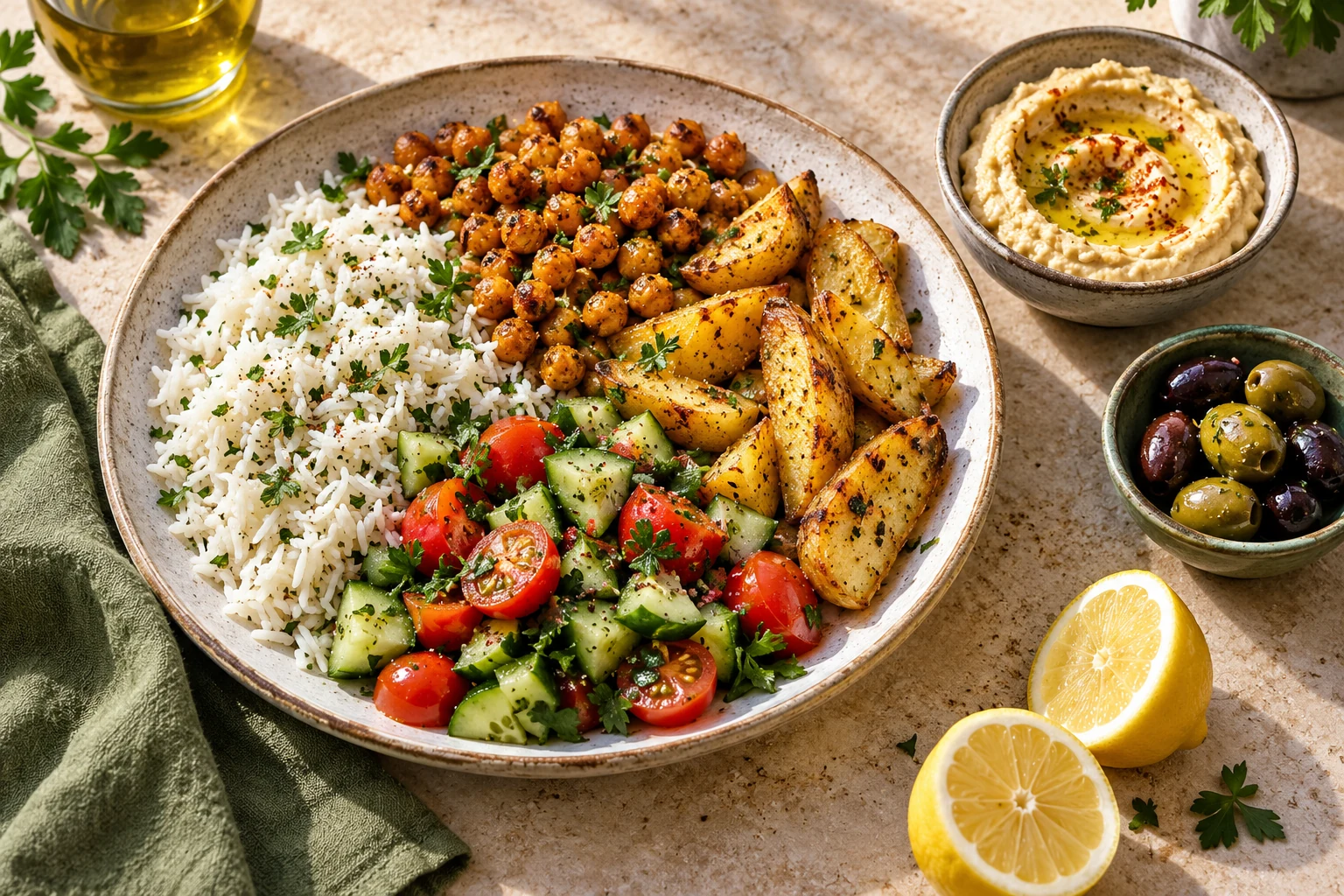
AI-generated illustration of rice, chickpeas, potatoes and salad; not a tested recipe or certification of ingredient or product safety.
- What is gluten? It is not sugar or a name for every carbohydrate
- Coeliac disease, wheat allergy and non-coeliac sensitivity are different
- Coeliac disease: an immune condition, not simply discomfort after bread
- Wheat allergy: avoidance needs to match the allergy
- Non-coeliac sensitivity: symptoms are not a self-diagnosis
- Before changing your bread, why does testing come first?
- Is gluten-free healthier—or better for weight loss?
- What can you eat? Start with familiar food, not just the replacement aisle
- How to read a packet without being led by its design
- What about oats? “Natural” is not the whole answer
- Sometimes the issue is the kitchen, not the ingredients list
- When should you seek advice, and what comes next?
You spot “gluten-free” on a packet of biscuits, and it almost sounds like a promise that the contents are better for you. But those words do not tell you whether the biscuits are low in sugar or rich in fibre. They answer one particular question about gluten. Deciding whether to buy them takes the rest of the story.
The short answer: a gluten-free diet is medically necessary for people with coeliac disease and may suit other conditions after professional assessment. It is not a guaranteed shortcut to better health or weight loss. If you suspect coeliac disease, discuss testing before removing gluten on your own.
General education, not a diagnosis or a personalised meal plan. Children, pregnant people and anyone with medical conditions or food allergies need advice appropriate to their circumstances.
What is gluten? It is not sugar or a name for every carbohydrate
Gluten refers to proteins in wheat, barley and rye that help give bread dough its structure. That puts it in ordinary bread and pasta, and foods made with ingredients from those grains. Rice and potatoes do not become sources of gluten simply because they are starchy. The FDA's gluten and food-labelling guide explains the ingredient and the claim on the packet.
For familiar Middle Eastern meals, remember that bulgur and semolina come from wheat; they are not gluten-free substitutes. Rice cooked with wheat vermicelli is not the same as plain rice. A dish's name does not reveal everything that went into it.
Coeliac disease, wheat allergy and non-coeliac sensitivity are different
Coeliac disease: an immune condition, not simply discomfort after bread
In coeliac disease—spelled celiac in US sources—the immune response to gluten damages the small intestine and can affect nutrient absorption. NHS guidance explains why it is not a temporary diet experiment. NIDDK describes the need for lifelong gluten avoidance and appropriate follow-up.
Wheat allergy: avoidance needs to match the allergy
Wheat allergy is an allergic response to wheat proteins, and some reactions can be serious. It is not another name for coeliac disease. A “gluten-free” claim alone does not settle every requirement of a wheat allergy: check ingredients and allergy information with your clinician. Cambridge University Hospitals explains the distinction between wheat-free and gluten-free diets.
Non-coeliac sensitivity: symptoms are not a self-diagnosis
Some people feel better avoiding wheat- or gluten-containing foods without having coeliac disease. The American College of Gastroenterology explains the need to rule out other conditions. Some fermentable carbohydrates, rather than gluten alone, may contribute to symptoms. Bloating after a sandwich is not a diagnostic test.
Before changing your bread, why does testing come first?
Removing gluten before coeliac testing can affect the results. That is why NIDDK's diagnostic guidance warns against starting the diet before testing without medical direction.
If you have already started, tell your clinician what changed and when. Do not reintroduce wheat to “test yourself,” or begin a home gluten challenge—especially if allergy is a possibility. A useful next step is to write down symptoms, what you have been eating and questions for the appointment, rather than removing more foods at random.
Is gluten-free healthier—or better for weight loss?
Not automatically. A Mayo Clinic dietitian's explanation distinguishes medical need from a general health claim. Some processed replacements may provide less fibre or important nutrients, while still being high in sugar or fat.
Picture two biscuits, one gluten-free. That label alone cannot rank their nutritional quality. Compare serving size, fibre, sugar and salt. Did the replacement help you build a varied diet, or move the same habits into more expensive packaging? This does not make every replacement a poor choice. It means nutritional quality needs its own assessment.
What can you eat? Start with familiar food, not just the replacement aisle
Many foods are naturally gluten-free in their plain form: rice, potatoes, vegetables, fruit, pulses, eggs and fish without gluten-containing additions. NIDDK's nutrition guidance explains why ingredients and additions matter, rather than the food's name alone.
The ideas below are editorial meal inspiration, not a treatment plan or a product-safety guarantee. With coeliac disease, check ingredients, preparation and gluten cross-contact; respect any other allergies too:
- An easy breakfast: eggs, vegetables and fruit, or plain yoghurt with fruit and nuts that suit you. Not every meal needs replacement bread.
- A familiar lunch: lentils with plain rice and salad. Do not assume every version of mujaddara is gluten-free: some recipes use bulgur.
- An adaptable dinner: roasted potatoes with fish or chickpeas and vegetables. Check marinades and ready-made sauces rather than judging safety by appearance.
- A salad idea: try parsley, tomatoes and cucumber with suitable quinoa instead of bulgur. It is a different version, not the original traditional tabbouleh recipe.
Choose two meals you already enjoy and identify what needs adjusting. That is a gentler starting point than buying ten products you do not know whether you will like. If you need the diet medically, a dietitian can help preserve variety rather than leaving you with rice and replacement bread.
How to read a packet without being led by its design
- Read the claim and ingredients: wheat-free does not automatically mean gluten-free, because barley and rye are not wheat.
- Check mixed products: sauces, soups and stock cubes need attention even when the main food seems suitable. Coeliac UK highlights these less obvious sources.
- Read again when you buy: do not rely on the packet's colour or remembering its name. If information is unclear, ask the manufacturer or a professional instead of guessing.
- Separate safety from nutrition: meeting gluten requirements does not tell you the sugar, fibre or salt content.
A specific regulatory example: for foods covered by FDA rules in the United States, a gluten-free claim requires less than 20 parts per million of gluten, alongside other conditions. That is not a certification we can transfer to every imported product or restaurant in Lebanon. Ask what standard and information apply locally.
What about oats? “Natural” is not the whole answer
Oats can come into contact with wheat, barley or rye during production. Coeliac UK explains that most people with coeliac disease tolerate gluten-free oats, but some do not. If oats are part of your medical diet, choose an appropriately labelled product and discuss introducing them with your dietitian. An attractive packet marked “natural oats” does not answer the entire safety question.
Sometimes the issue is the kitchen, not the ingredients list
Contact with crumbs or gluten-containing ingredients matters for coeliac disease. Coeliac UK recommends practical precautions: clean surfaces and utensils, a separate toaster or protective toaster bags, avoiding crumbs in shared butter or jam, and clean frying oil or a separate fryer.
At a restaurant, replace “Do you have healthy food?” with a more useful question: “I have coeliac disease. Are the ingredients suitable, and how do you prevent contact with flour or breadcrumbs?” For fried potatoes, ask what else uses the oil. Clear answers about preparation matter more than a reassuring word on the menu.
When should you seek advice, and what comes next?
Discuss recurring diarrhoea, pain or bloating, unintended weight loss, or coeliac disease in a first-degree relative with a clinician rather than diagnosing yourself. NHS guidance covers these situations, but none of them proves gluten is the cause on its own.
Get emergency care immediately for breathing difficulty, throat tightness or wheezing after food. These may signal a severe allergic reaction, as explained by the American Academy of Allergy, Asthma & Immunology. Follow your prescribed allergy emergency plan if you have one, and do not test the food again at home.
Without a medical need, do not make gluten an automatic enemy. If you do need the diet, it does not sentence you to boring meals. Start with food you enjoy, learn the safety details, and put the label in its proper place: useful information, not a verdict on everything you eat.
Editorially prepared using the linked sources; not independently clinically reviewed. Sources checked on 12 October 2026.
The cover is an AI-generated food illustration; it does not verify that any real meal or product is gluten-free. Real medical sources are linked in the article.



What do you think?
Share your thoughts or experience. Keep the conversation kind and on topic.
Participation Rules
نريدك أن تكون مصدرًا لزملائك من القراء ونأمل أن تستخدم قسم التعليقات لإجراء ذلك. لقد صممناها لرفع وتوسيع الاستجابات الأكثر ذكاءً وإدانةً ، وتقليل أو إخفاء الأسوأ. هذه هي قواعد الطريق:
ابقى في صلب الموضوع
عند تقديم تعليق ، لا تخرج عن الموضوع. لا تعلق على المعلقين الآخرين أو معتقداتهم السياسية المفترضة. ناقش مزايا القصة نفسها. لا تنشر تومي. هذا ليس المكان المناسب لصق فصل من رسالتك (أو أي شخص آخر) أو ورقة بيضاء.
أظهر الإحترام.
نحن نشجع ونقدر النقاش العميق. ما عليك سوى التأكد من أنه عندما لا تتفق مع فرضية القصة أو أي معلق آخر ، فإنك تفعل ذلك بطريقة محترمة ومهذبة.
كن مهذبا وحافظ على نظافته
نحن نغطي التكنولوجيات الجديدة موقعنا ليس منفذاً للفظاظة. نحن لا نتسامح مع الإهانات الشخصية ، بما في ذلك استدعاء الأسماء أو العنصرية أو التمييز الجنسي أو الكلام الذي يحض على الكراهية أو الفحش. هذا يعني أنه لا توجد أي ملاحظات بذيئة أو مسيئة أو مضايقة أو تنمر. إذا لم تكن مدنيًا ومهذبًا ، فلا تنشره.
تجاهل المتصيدون
أفضل رد على القزم - شخص ما يتكرر عدائيًا واستفزازًا - ليس ردًا. من فضلك لا تشجع السلوك السيئ عن طريق الاستجابة ؛ انها لا تخدم سوى لسرور المتصيدون والبيض عليها. إذا كان هناك شخص ما يسيء استخدام موضوع مناقشة ، فأبلغ عن أي تعليقات مسيئة ، وسنتناول الموقف.
كن مسؤولاً وأصيلاً
انشر آرائك فقط بكلماتك الخاصة. أنت مسؤول عن المحتوى الذي تنشره.
لا تنشر رسائل غير مرغوب فيها أو إعلانات
إذا لم يكن لديك عقد إعلان معنا ، فإن هذا الموقع الإلكتروني ليس عبارة عن لوحة إعلانات لنشاطك التجاري. لا تنشر محتوى غير مرغوب فيه أو محتوى ترويجي ذاتي أو حملات إعلانية. لا ضغط أو تجنيد أو استجداء.
نقرأ التعليقات
على الرغم من أن مجالس مناقشاتنا لا تخضع للإشراف الرسمي ، إلا أننا نولي اهتمامًا وثيقًا بها. نحتفظ بالحق في تعديل أو حذف التعليقات التي لا تلبي معاييرنا.
نحن نحظر الأعضاء الفاضحين
إنه ليس شيئًا نتمتع به. ولكن عند الضرورة ، سنحظر الأعضاء الذين لا يلتزمون بهذه الإرشادات.
شكرا على اتباع هذه المبادئ التوجيهية.