
Salar de Uyuni: Where the Ground Turns Into a Mirror of the Sky
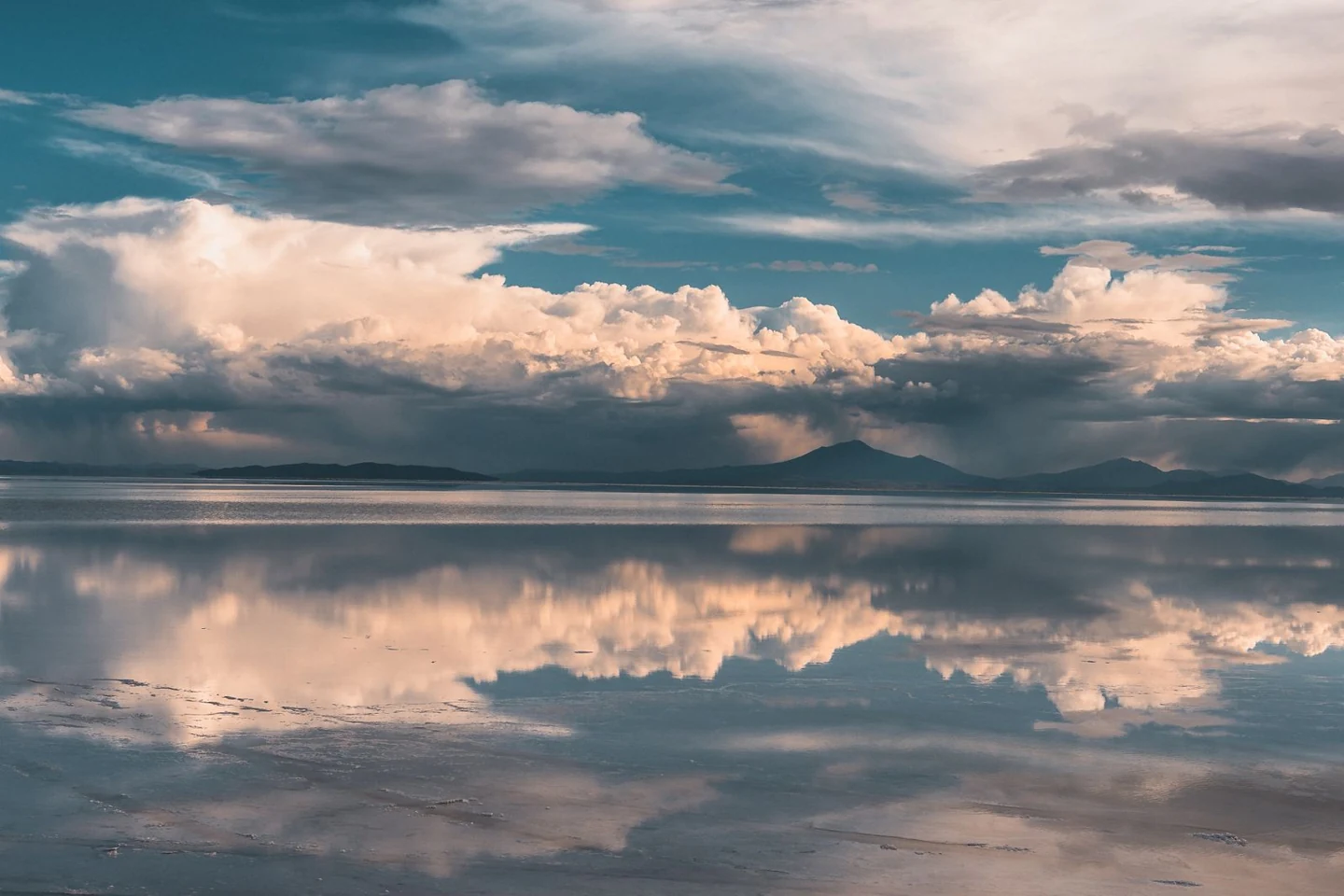
Clouds and mountains reflected over water on the Uyuni salt flat. Photo: Willian Justen de Vasconcellos / Pexels; a photographed moment, not a promise of particular visiting conditions.
- A white landscape with two very different faces
- The mirror is water, not polished salt
- The photograph is a moment, not a year-round setting
- Why a tiny object can make the scene feel enormous
- The surprising audience: satellite scientists
- Three reflection photographs to try with a phone
- If the image makes you want to go
- Sources and photographs
Cover the thin line of mountains in this photograph with your finger. For a moment, deciding where the sky ends and the ground begins becomes surprisingly difficult. The clouds have a second home beneath them.
This is Salar de Uyuni in Bolivia, not a digitally invented planet. Its famous mirror appears when water covers the salt flat under suitable conditions. But the more you learn about this place, the less it needs the word “unreal”: the real explanation is already extraordinary.
A white landscape with two very different faces
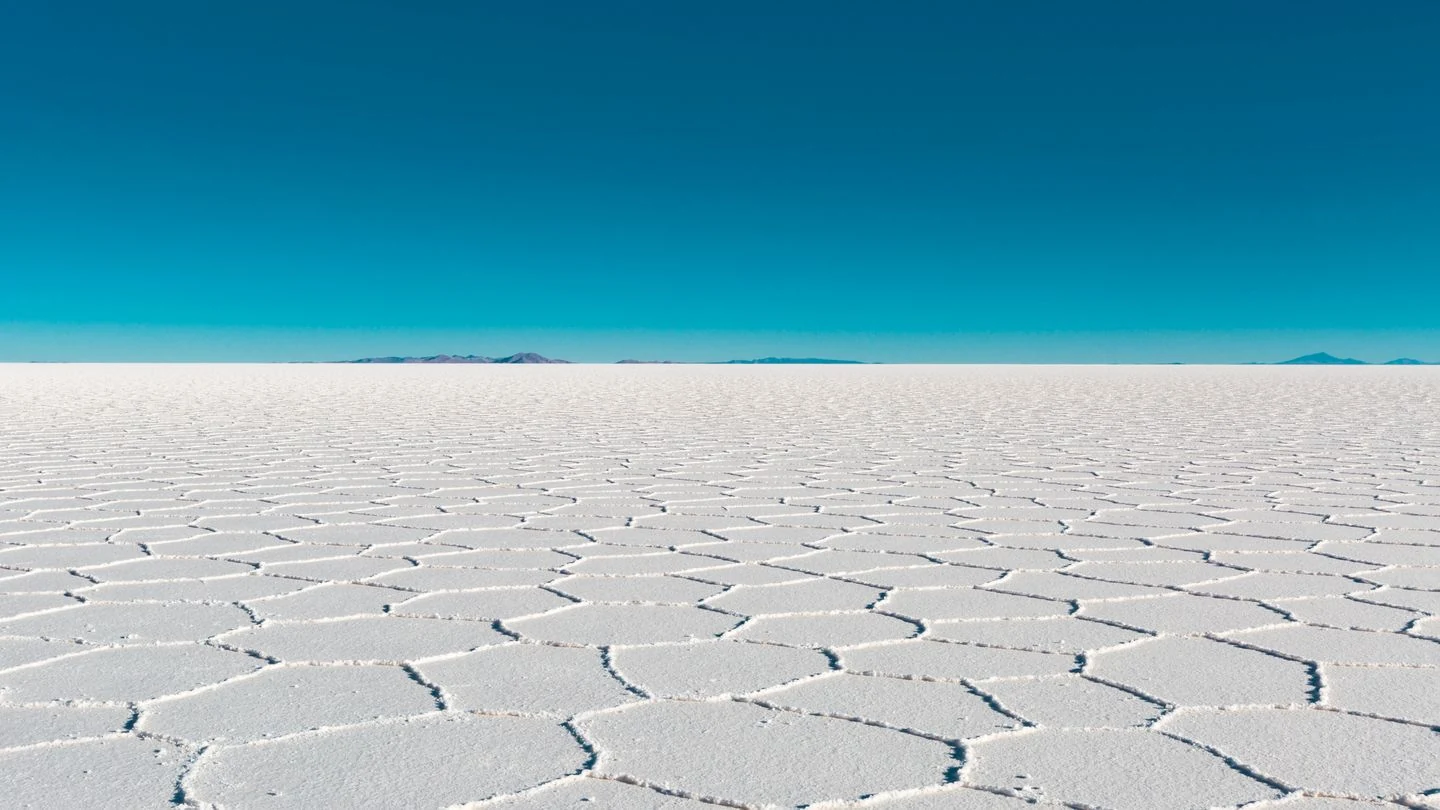
Uyuni is the world’s largest salt flat, covering more than 10,000 square kilometres. The European Space Agency explains that the region was once part of a prehistoric lake. After it dried, a vast salty landscape remained on Bolivia’s high Altiplano.
In a dry view, the attraction is texture and distance: pale ground, repeating patterns, a horizon that seems unwilling to arrive. Add surface water and the same place tells a different story. Instead of studying the ground, you start seeing the sky in it.
The mirror is water, not polished salt
The basic ingredient is a relatively smooth water surface. Light reflected from a smooth surface preserves an orderly relationship between incoming and outgoing directions; a rough surface sends it in more directions. OpenStax’s explanation of reflection describes the difference.
Think of the salt flat as the stage and the water as the reflective surface. Ripples disturb that surface and break up the crisp picture. That is why “it rained” and “there will be a perfect mirror” are not interchangeable statements. Coverage, surface conditions and viewpoint all matter.
The photograph is a moment, not a year-round setting
NASA Earth Observatory’s comparison of dry and flooded Uyuni shows how much water coverage can change. Its account of early 2022 describes unusually extensive and persistent flooding. That is a dated observation, not a forecast for your trip.
A useful way to read a destination photograph is to ask what must have been true when it was taken. Here, there had to be reflective water in the frame and suitable light. The picture does not tell you that every part of the flat looked identical, or that the same view will be waiting on a particular date.
That does not spoil the magic. It makes it more interesting: the landscape is doing something temporary, and the photographer noticed.
Why a tiny object can make the scene feel enormous
Our eyes look for clues to scale: a tree, a familiar building, a person. Remove most of those clues and distance becomes harder to judge. In the cover, the mountain line gives your eye something to hold onto. Without it, the two halves begin to resemble a folded sheet of sky.
Try looking again in three passes. First follow the horizon. Then compare a cloud with its reflection. Finally find the small imperfections near the foreground. Those irregularities are part of the photograph’s character; a real reflection does not need to be perfectly symmetrical to be convincing.
The surprising audience: satellite scientists
Uyuni is not only useful to photographers. The US Geological Survey’s calibration-site catalogue describes its large, uniform surface as valuable for checking satellite sensors. ESA also discusses its suitability for radar-altimeter calibration because of its exceptional flatness.
These are different measurement tasks, not a claim that every satellite is calibrated against a rainy-day mirror. USGS notes that flooding and moisture can limit some calibration uses. The dry, consistent surface can be scientifically valuable precisely when it is not making the famous tourist reflection.
That is a delightful reversal: the frame you would skip because “the mirror isn’t there” might still be the landscape an instrument scientist wants.
Three reflection photographs to try with a phone
You can practise these ideas at a safe, accessible puddle near home; there is no need to travel to Bolivia to learn the composition.
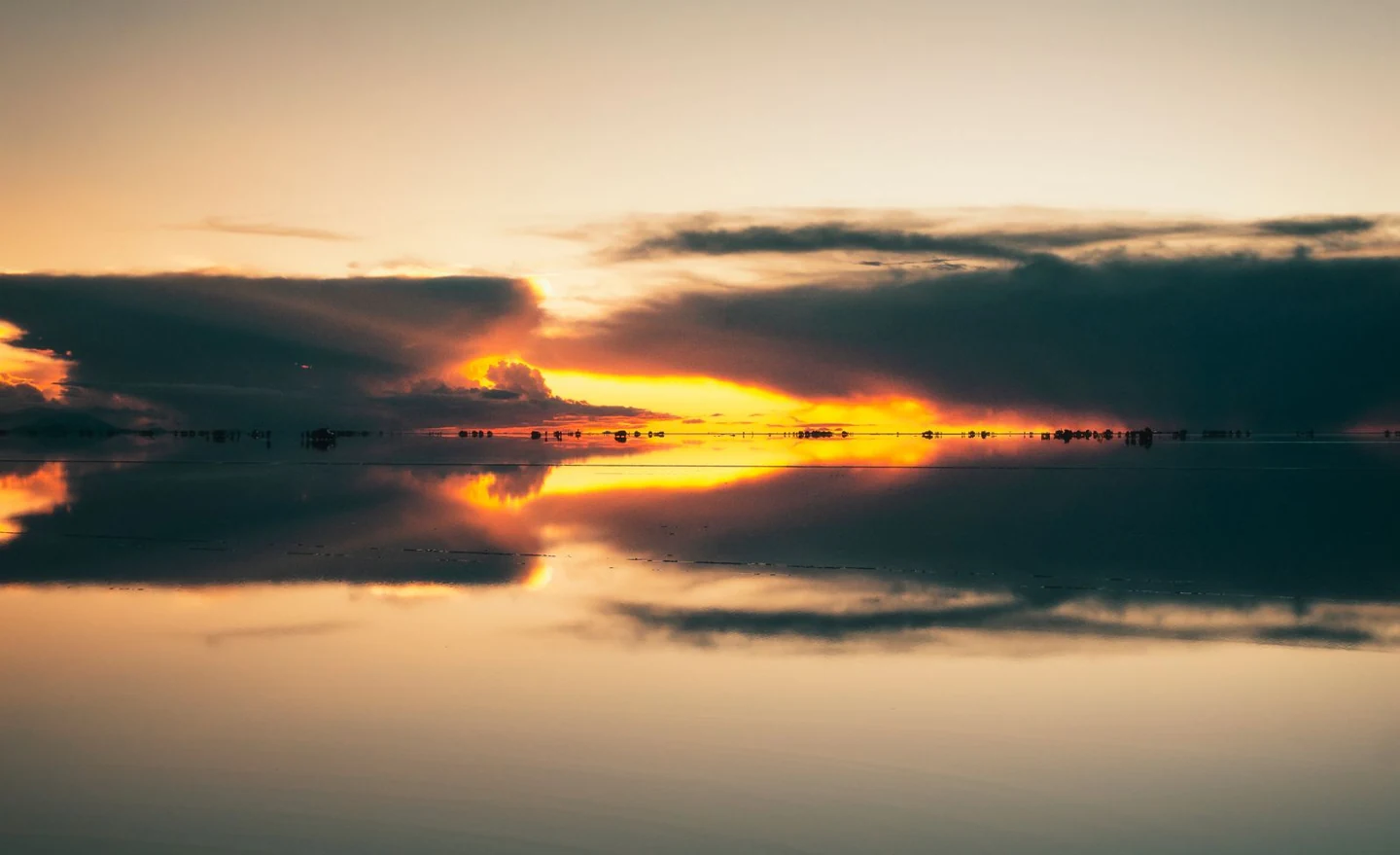
- The balanced frame: put the horizon or reflection boundary near the middle. Usually photography advice tells you to avoid splitting a frame in half; here, balance can be the point.
- The low viewpoint: lower the phone while keeping it safely clear of the water. Compare what appears in the reflection before choosing the angle.
- The deliberate interruption: include a leaf or another small foreground detail. It can give the eye an anchor instead of leaving the photograph as an undifferentiated wash of colour.
Make a frame, change just one thing, then compare. If bright clouds lose their detail, try a slightly darker exposure and review the result. There is no universal phone setting. You are learning to notice light, not collecting a recipe that must work everywhere.
If the image makes you want to go
Start with the landscape, not a promise to reproduce this cover. A wet surface can affect access as well as appearance. Uyuni is also a high-altitude, remote setting, not a casual walk across a shallow beach.
Check current official travel advice for Bolivia alongside the advice relevant to your nationality, and confirm local conditions and permitted routes with a reputable operator. Do not use this article or a photograph as a driving map. No season, price, road condition or exact reflection is guaranteed here.
For another landscape whose photograph hides an interesting explanation, explore Pamukkale’s white terraces. The pleasure is not simply finding places that resemble fantasy. It is discovering that the real world has been more inventive than we expected.
Sources and photographs
Geography and measurement context: ESA, NASA and USGS, linked above. Reflection principles: OpenStax. Photography exercises are Dajran editorial suggestions, not a test conducted at Uyuni. This is a researched feature, not a first-person travel report.
Cover: Willian Justen de Vasconcellos / Pexels. Dry landscape: Leonardo Rossatti. Sunset: Mycroft Roxton. Interior image sources are linked in the captions. All three photographs are used under the Pexels licence; they depict separate moments, not a single documented sequence.
All three photographs are from Pexels, credited and linked above. They were proportionally resized and converted to WebP with the full frames preserved; we did not generate scenes, add reflections or alter colours.



What do you think?
Share your thoughts or experience. Keep the conversation kind and on topic.
Participation Rules
نريدك أن تكون مصدرًا لزملائك من القراء ونأمل أن تستخدم قسم التعليقات لإجراء ذلك. لقد صممناها لرفع وتوسيع الاستجابات الأكثر ذكاءً وإدانةً ، وتقليل أو إخفاء الأسوأ. هذه هي قواعد الطريق:
ابقى في صلب الموضوع
عند تقديم تعليق ، لا تخرج عن الموضوع. لا تعلق على المعلقين الآخرين أو معتقداتهم السياسية المفترضة. ناقش مزايا القصة نفسها. لا تنشر تومي. هذا ليس المكان المناسب لصق فصل من رسالتك (أو أي شخص آخر) أو ورقة بيضاء.
أظهر الإحترام.
نحن نشجع ونقدر النقاش العميق. ما عليك سوى التأكد من أنه عندما لا تتفق مع فرضية القصة أو أي معلق آخر ، فإنك تفعل ذلك بطريقة محترمة ومهذبة.
كن مهذبا وحافظ على نظافته
نحن نغطي التكنولوجيات الجديدة موقعنا ليس منفذاً للفظاظة. نحن لا نتسامح مع الإهانات الشخصية ، بما في ذلك استدعاء الأسماء أو العنصرية أو التمييز الجنسي أو الكلام الذي يحض على الكراهية أو الفحش. هذا يعني أنه لا توجد أي ملاحظات بذيئة أو مسيئة أو مضايقة أو تنمر. إذا لم تكن مدنيًا ومهذبًا ، فلا تنشره.
تجاهل المتصيدون
أفضل رد على القزم - شخص ما يتكرر عدائيًا واستفزازًا - ليس ردًا. من فضلك لا تشجع السلوك السيئ عن طريق الاستجابة ؛ انها لا تخدم سوى لسرور المتصيدون والبيض عليها. إذا كان هناك شخص ما يسيء استخدام موضوع مناقشة ، فأبلغ عن أي تعليقات مسيئة ، وسنتناول الموقف.
كن مسؤولاً وأصيلاً
انشر آرائك فقط بكلماتك الخاصة. أنت مسؤول عن المحتوى الذي تنشره.
لا تنشر رسائل غير مرغوب فيها أو إعلانات
إذا لم يكن لديك عقد إعلان معنا ، فإن هذا الموقع الإلكتروني ليس عبارة عن لوحة إعلانات لنشاطك التجاري. لا تنشر محتوى غير مرغوب فيه أو محتوى ترويجي ذاتي أو حملات إعلانية. لا ضغط أو تجنيد أو استجداء.
نقرأ التعليقات
على الرغم من أن مجالس مناقشاتنا لا تخضع للإشراف الرسمي ، إلا أننا نولي اهتمامًا وثيقًا بها. نحتفظ بالحق في تعديل أو حذف التعليقات التي لا تلبي معاييرنا.
نحن نحظر الأعضاء الفاضحين
إنه ليس شيئًا نتمتع به. ولكن عند الضرورة ، سنحظر الأعضاء الذين لا يلتزمون بهذه الإرشادات.
شكرا على اتباع هذه المبادئ التوجيهية.