
Petra Is More Than the Treasury: How to Read a City Carved in Stone
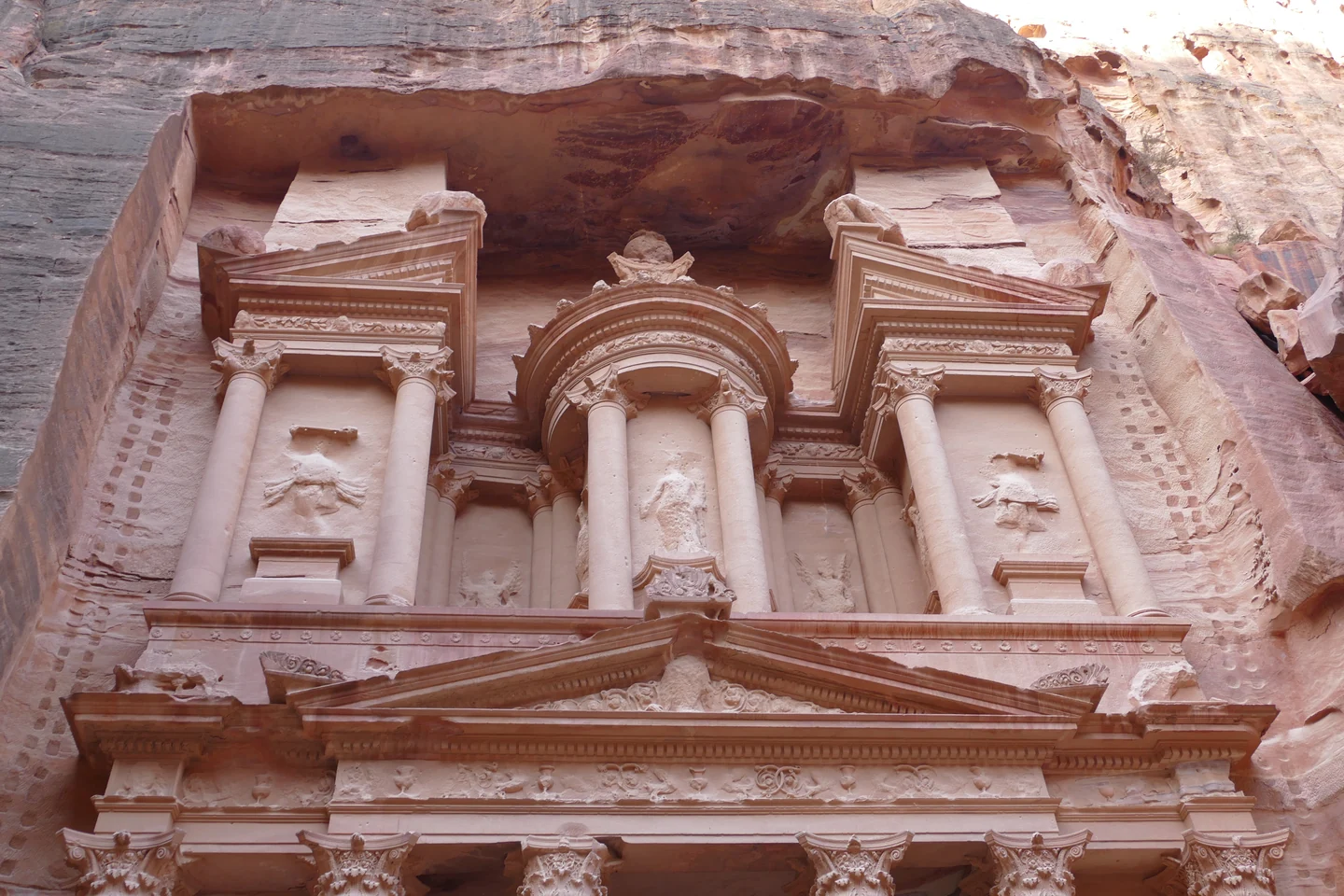
The carved upper façade of Petra’s Treasury, photographed by Ankur P in 2018; this detail view does not show the whole monument.
- First, separate the city from its most famous monument
- Read the cover photo from the rough rock toward the columns
- A familiar name is not an answer to every historical question
- The quieter marvel: making water part of the city
- Zoom out: the Royal Tombs put the mountain back in view
- Make a three-picture story instead of collecting the same shot
- Turn the inspiration into a visit you can actually enjoy
- Sources and photograph credits
You probably recognize Petra before you know much about it: pink stone, elegant columns, a monumental façade emerging from a mountain. The Treasury is so photogenic that it can accidentally shrink an entire city into one picture.
But a better question than “How do I get that shot?” is “What am I actually looking at?” Follow the edge of the carved stone, look past the impressive entrance, and ask how anyone supplied a settlement here with water. Suddenly, Petra becomes much more interesting than a famous backdrop.
This is a guide to looking, not a race around a checklist. You can start with the photographs here, then use the same questions when planning a visit.
First, separate the city from its most famous monument
UNESCO’s Petra record describes a Nabataean trading city in present-day Jordan, with both rock-cut and built architecture. Its remains include tombs, temples, churches and other public buildings. Petra is not simply another name for the Treasury.
That distinction changes your expectations. A photograph of one façade cannot tell you how streets, buildings and open spaces connected. Think of a familiar city: showing only its cathedral or most celebrated doorway would leave out almost everything about living there.
Read the cover photo from the rough rock toward the columns
Start at the upper edge of the picture. You can see irregular stone above the carefully shaped architecture. Move downward and the scene changes into straight lines, repeated columns, projecting ledges and curved decoration.
Now ask where the mountain ends and the monument begins. The Treasury is carved into the cliff; the surrounding rock is not a stage set placed behind a separate building. The pleasure of this detail view is seeing deliberate shapes emerge within a much less regular surface.
Try three small observations:
- Follow one horizontal ledge. Where does its crisp line become difficult to read?
- Compare the center with the sides. Which shapes repeat, and which interrupt the repetition?
- Look at the frame itself. The cover leaves out the lower entrance and the whole setting. What extra picture would you need before describing the entire monument?
You do not need to memorize architectural vocabulary to enjoy the composition. “That curved shape breaks the straight line” is already a useful observation.
A familiar name is not an answer to every historical question
The American Museum of Natural History’s illustrated Petra guide notes that historians associate the Treasury with a Nabataean king, but no inscription identifies which one; it also describes uncertainty over a possible temple function. The nickname alone is not a reliable floor plan or a complete explanation of its use.
Here is a useful travel habit: separate what you can see from what you have learned. “There are columns on the façade” is visible. Naming its original patron requires historical evidence. A dramatic entrance does not let us invent a royal biography.
This makes a visit more rewarding, not less. A question can remain interesting even when the honest answer is “We do not know that for certain.”
The quieter marvel: making water part of the city
UNESCO identifies channels, tunnels, diversion dams, cisterns and reservoirs as part of Petra’s water-management remains. The museum guide describes rock-cut channels and clay pipes along the Siq. Water infrastructure belongs in the story alongside monumental façades.
Use that as a change of focus. Instead of looking only for the largest object, ask what made the setting usable: where could water be collected, carried and kept? If a guide or site label identifies a feature, connect that explanation with what you can actually see. A random groove in a photograph is not automatically an ancient channel.
It is the difference between admiring a beautiful house and finally asking where its kitchen, plumbing and front door are. The second question brings people back into the picture.
Zoom out: the Royal Tombs put the mountain back in view
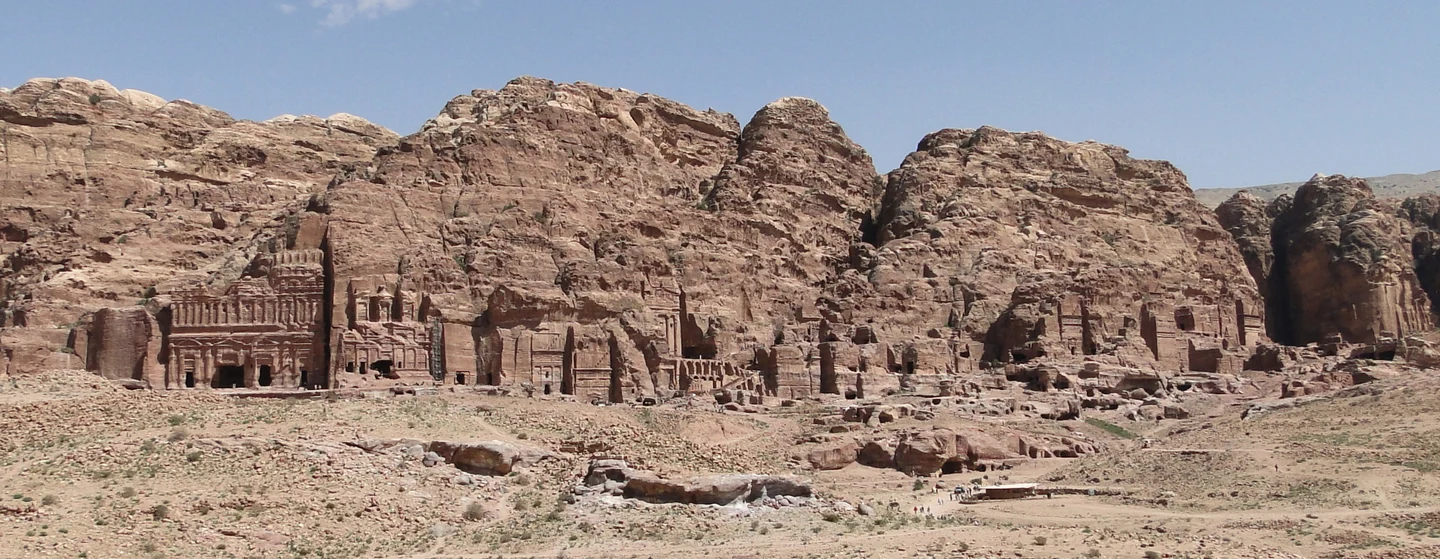
Compare this wide view with the cover detail. The façades now occupy only part of a much larger rock face. You can notice the spaces between them, their different sizes, and the terrain below. This is a different part of Petra, not another angle of the Treasury.
Pick one clear façade and follow its outline upward. Then let your eye move sideways into uncarved rock. The contrast is the point: one close picture emphasizes ornament; a wide picture explains how architecture sits in a landscape.
Keep both kinds of image. A close-up without context can turn a city into a texture. A panorama without a detail can make extraordinary workmanship disappear into a distant cliff.
Make a three-picture story instead of collecting the same shot
For a simple personal photo project, try this sequence from safe, permitted viewpoints:
- The setting: show a monument together with the surrounding rock and open space. Caption it with the location, not just “Petra.”
- The design: choose a façade or repeated pattern. Name the feature only if you can verify it from a label or reliable guide.
- The question: photograph one detail that made you curious. Write what you noticed, then what you still want to find out.
For example: “The shaped ledge becomes rough at this edge. Is that damage, an unfinished area, or something else?” That is a stronger caption than guessing. Keep the question open until you have evidence.
No special camera is required for the exercise. Nor do you need to climb onto a monument, enter a closed doorway or recreate someone else’s high viewpoint. A picture is not worth crossing a barrier.
Turn the inspiration into a visit you can actually enjoy
Before booking, ask the official visitor service or your licensed guide about current access, permitted routes, opening arrangements, weather-related closures and the walking involved. Historical photographs are not evidence that a route is open now. Check current travel advice for your situation, too.
Choose the part you most want to understand, then allow room for stops and a return journey. “I want to compare a carved façade with the wider city” is a more useful starting point than “I must photograph everything.” If traveling with others, agree on a comfortable pace rather than letting an attractive online image set everyone’s route.
Our short-trip budget guide helps turn the idea into a realistic plan. For another landscape that rewards looking twice, explore the Giant’s Causeway and its apparently laid stone pavement.
The best thing to bring home may be a better question: not only “How beautiful is this place?” but “What did I finally notice?”
Sources and photograph credits
The linked UNESCO record supplies the city and water-system context; the museum guide supports the Treasury and Siq discussion. The photo-reading exercise and three-picture brief are editorial suggestions, not claims of an archaeological survey or a Dajran visit.
Cover: Ankur P, “The Treasury (Al Khazneh) at Petra (12)”, photographed in 2018, via Wikimedia Commons from the photographer’s Flickr page, CC BY 2.0. The second photograph’s creator and license are in its caption.
These are photographs from earlier years, not a Dajran site visit or a report of conditions today. Preparation used full-frame proportional resizing and WebP conversion, without adding elements. Both languages use the same images; the Royal Tombs image retains CC BY-SA 3.0.




What do you think?
Share your thoughts or experience. Keep the conversation kind and on topic.
Participation Rules
نريدك أن تكون مصدرًا لزملائك من القراء ونأمل أن تستخدم قسم التعليقات لإجراء ذلك. لقد صممناها لرفع وتوسيع الاستجابات الأكثر ذكاءً وإدانةً ، وتقليل أو إخفاء الأسوأ. هذه هي قواعد الطريق:
ابقى في صلب الموضوع
عند تقديم تعليق ، لا تخرج عن الموضوع. لا تعلق على المعلقين الآخرين أو معتقداتهم السياسية المفترضة. ناقش مزايا القصة نفسها. لا تنشر تومي. هذا ليس المكان المناسب لصق فصل من رسالتك (أو أي شخص آخر) أو ورقة بيضاء.
أظهر الإحترام.
نحن نشجع ونقدر النقاش العميق. ما عليك سوى التأكد من أنه عندما لا تتفق مع فرضية القصة أو أي معلق آخر ، فإنك تفعل ذلك بطريقة محترمة ومهذبة.
كن مهذبا وحافظ على نظافته
نحن نغطي التكنولوجيات الجديدة موقعنا ليس منفذاً للفظاظة. نحن لا نتسامح مع الإهانات الشخصية ، بما في ذلك استدعاء الأسماء أو العنصرية أو التمييز الجنسي أو الكلام الذي يحض على الكراهية أو الفحش. هذا يعني أنه لا توجد أي ملاحظات بذيئة أو مسيئة أو مضايقة أو تنمر. إذا لم تكن مدنيًا ومهذبًا ، فلا تنشره.
تجاهل المتصيدون
أفضل رد على القزم - شخص ما يتكرر عدائيًا واستفزازًا - ليس ردًا. من فضلك لا تشجع السلوك السيئ عن طريق الاستجابة ؛ انها لا تخدم سوى لسرور المتصيدون والبيض عليها. إذا كان هناك شخص ما يسيء استخدام موضوع مناقشة ، فأبلغ عن أي تعليقات مسيئة ، وسنتناول الموقف.
كن مسؤولاً وأصيلاً
انشر آرائك فقط بكلماتك الخاصة. أنت مسؤول عن المحتوى الذي تنشره.
لا تنشر رسائل غير مرغوب فيها أو إعلانات
إذا لم يكن لديك عقد إعلان معنا ، فإن هذا الموقع الإلكتروني ليس عبارة عن لوحة إعلانات لنشاطك التجاري. لا تنشر محتوى غير مرغوب فيه أو محتوى ترويجي ذاتي أو حملات إعلانية. لا ضغط أو تجنيد أو استجداء.
نقرأ التعليقات
على الرغم من أن مجالس مناقشاتنا لا تخضع للإشراف الرسمي ، إلا أننا نولي اهتمامًا وثيقًا بها. نحتفظ بالحق في تعديل أو حذف التعليقات التي لا تلبي معاييرنا.
نحن نحظر الأعضاء الفاضحين
إنه ليس شيئًا نتمتع به. ولكن عند الضرورة ، سنحظر الأعضاء الذين لا يلتزمون بهذه الإرشادات.
شكرا على اتباع هذه المبادئ التوجيهية.