
Small Entryway, Too Many Shoes? Plan Your Arrival Before Buying Storage
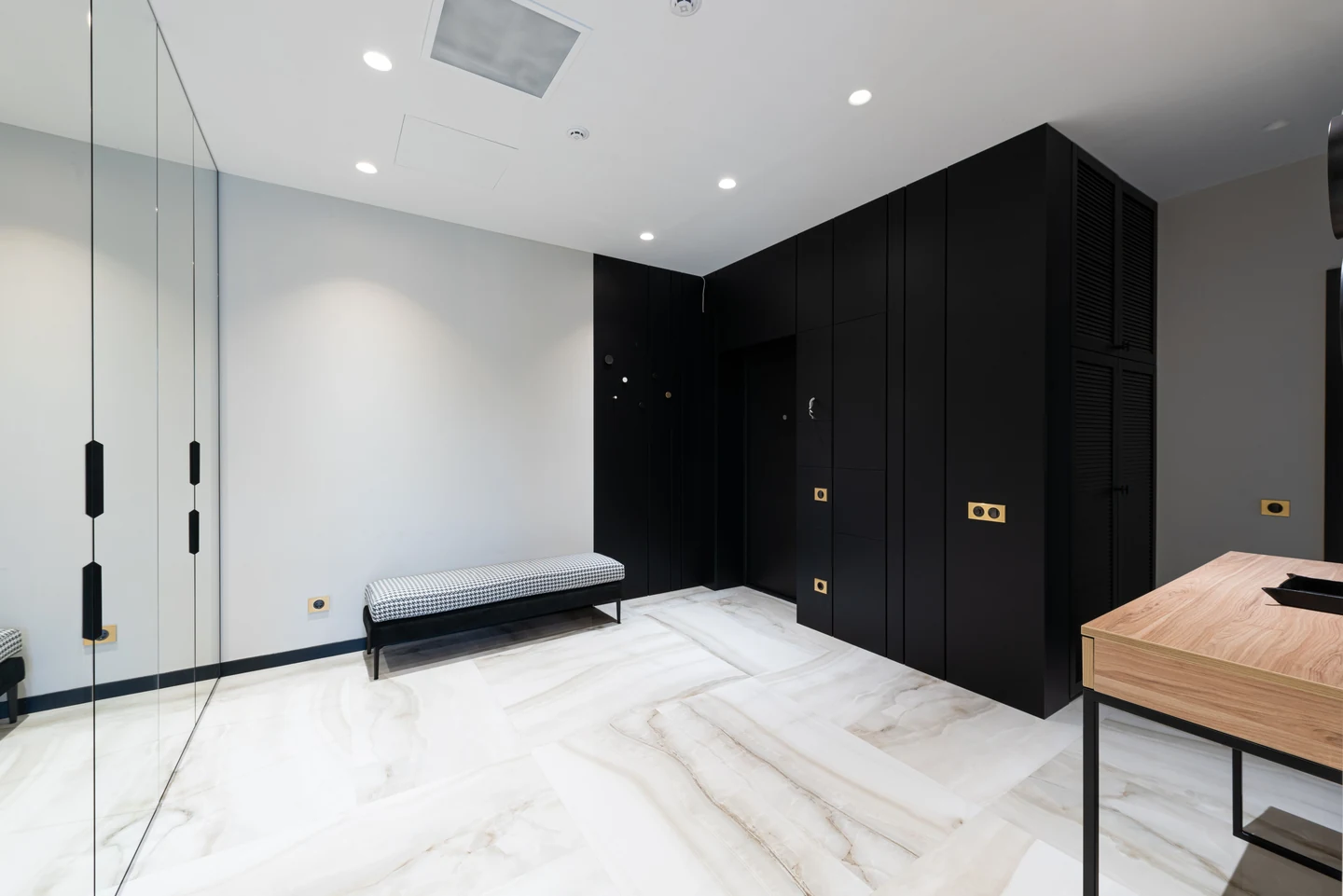
Modern entrance with black cabinetry, an upholstered bench and mirrors. Photo: Max Vakhtbovych / Pexels; illustrative, not a measured plan for your entryway.
- Watch the first minute after opening the door
- Make it an everyday stop, not your entire shoe collection
- Plan three jobs, not three pieces of furniture
- Open or closed? Choose the inconvenience you can live with
- Before buying, check the depth in use
- A worked example: three people, six pairs
- Add warmth without bringing the obstacles back
- Try the arrangement for a week before adding more
You open the door with a shopping bag, nudge a shoe out of the way, and drop your keys on the first available surface. Tomorrow morning, you will be looking for them. The entrance may be small, but the bigger problem could be that it is trying to store more than your day actually needs.
Organizing a small entryway starts with movement, not a new cabinet. You need somewhere to arrive, put down everyday belongings, and find them again when you leave. Here is a practical way to plan that sequence, including a three-person household example you can adapt before spending anything.
Watch the first minute after opening the door
Come in as you normally would, carrying your usual bag or a light shopping bag. Do not tidy the scene for a photograph first. Where do you stop? Do you need to sit to remove shoes? What do you put down before taking off your coat? Write down the first obstacle that bothers you, rather than everything you dislike about the house.
Open the entrance and storage doors normally. A slim console can look sensible when closed, then reveal that its drawer occupies exactly where you need to stand. Include handles, hanging bags, and the edge of a basket in your inspection. Furniture has a working footprint as well as a closed footprint.
Keep the route in and out unobstructed, and do not place anything that prevents the door opening or being used. If someone uses a mobility aid or a pushchair, start with that person's actual needs. One generic clearance measurement from an article cannot replace an assessment of your space and applicable requirements.
Make it an everyday stop, not your entire shoe collection
Gather what has accumulated by the door and sort it into three groups: used on a normal outing, needed occasionally, and apparently living here without a reason. This is a relocation exercise, not an instruction to throw useful things away.
- Keep nearby: shoes in regular use, your everyday bag, and outerwear suited to the weather.
- Store elsewhere: occasion shoes, spare bags, and out-of-season clothing.
- Give a destination: an item awaiting repair, something to return to a friend, or a parcel that needs attention. Do not award it permanent residence at the door.
Set capacity by what you can keep usable, not how many shelves you can squeeze in. When the everyday shoe space fills, review its contents instead of creating another row in front. You catch the problem while it is still a decision, rather than after the floor has become an extra shelf.
Plan three jobs, not three pieces of furniture
Think of three small jobs: a place for shoes, a place for a bag or coat, and a place for small essentials. You do not need to buy a separate product for each. An existing unit with a small container inside it, or part of a nearby cupboard outside the passage, may be enough.
IKEA's small-hallway examples illustrate shallow storage and wall-mounted places for everyday belongings. This is a retailer's inspiration page, not an independent product comparison. Borrow the function, then ask whether your home needs it at all.
Give small items a home that is easy to use repeatedly. A container that holds keys and earbuds is more purposeful than a large tray that becomes an open drawer for receipts and loose change. Keep keys in a private indoor location, out of view and beyond reach from outside doors or windows.
Open or closed? Choose the inconvenience you can live with
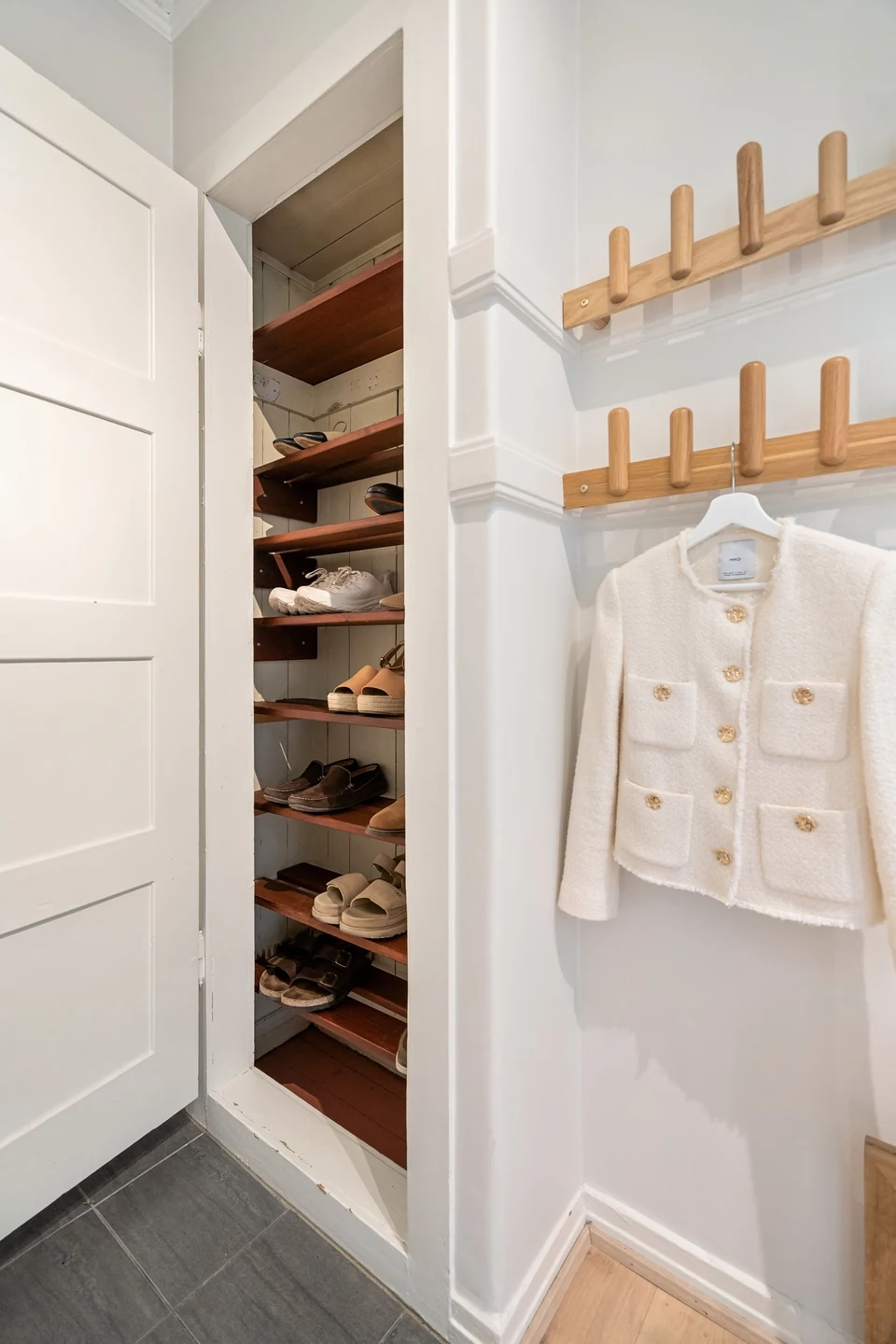
Open storage makes things visible and easy to pick up, but cannot conceal a collection that has outgrown it. It suits a limited set of regularly used belongings, rather than everything you own.
Closed storage gives a quieter appearance but introduces a step: open, put away, close. If your bag always ends up on top of the cabinet, ask whether the door is awkward in that position or the bag is difficult to fit inside. The problem may be access, not your willingness to tidy.
A combination can work. Hide shoes while leaving a simple place for a bag, or keep small items in a drawer. Do not cram wet footwear into a packed cupboard: follow footwear and storage care instructions, and provide an appropriate drying location that does not obstruct movement.
Before buying, check the depth in use
Record the width, depth, and height of a candidate, then ask how much space its doors or drawers need when open. Rehearse the footprint using removable tape suitable for your finish, or identify corner positions outside the walking route, and remove markers afterwards. Do not leave loose sheets on the floor as part of the trial.
Picture the full action: open the cabinet, bend to select shoes, and stand up again. Does another person have to wait in the doorway? Must you move the seat to open the drawer? A piece with two functions does not really save space if using one prevents the other.
Do not sit on a shelf or storage box simply because its height looks right; use seating designed for that purpose and follow its limits and instructions. The US Consumer Product Safety Commission's Anchor It! guidance stresses following furniture-securing instructions to help prevent tip-overs. Do not skip required anchoring because you prefer not to drill. Clarify permission and suitable installation, or choose another solution.
A worked example: three people, six pairs
Imagine three household members agree to keep two regularly used pairs each by the entrance: three × two pairs = six pairs. This is an organizing example, not an ideal allocation for every home. Bulky work shoes or someone's particular needs could change it.
Start with existing storage that holds those six pairs without forcing or piling them up. Give the remaining shoes a known location elsewhere. Put the everyday bag somewhere it does not project into the passage, and place small essentials in their private spot. Preserve enough useful surface to set down what you are carrying temporarily.
After an ordinary day, look at whatever has landed on the floor. Did it have no home, or was its home too awkward to use? If an extra pair keeps appearing, swap out one of the allocated pairs or reconsider capacity. The example is not a reason to deny someone something they need; it is a way to replace accidental accumulation with a decision.
Add warmth without bringing the obstacles back
Once the jobs work, add a detail you enjoy: a color that connects with the rest of the home, or one small object on a surface you do not need for everyday use. An entrance is not obliged to contain a mirror, a plant, a bench, and a rug.
If you choose a rug or mat, check its suitability for the floor, its stability, whether its edges curl, and whether the door opens over it without catching. IKEA's page also suggests an anti-slip underlay. Choose a compatible rug-and-floor solution according to product instructions, rather than improvising layers.
To stop the obstacles continuing into the next room, our small living-room layout guide covers that separate space-planning task. Buying a substantial piece? Check the furniture delivery-route guide too: fitting the final location does not mean the item will pass through your front door.
Try the arrangement for a week before adding more
Treat a week as a suggested home trial, not a promise about how quickly habits form. Each time you arrive, notice whether you can enter and put things away without shifting an obstacle. When leaving, can you find what you need in an expected place?
Copy this short record: recurring obstacle: __; everyday belongings: __; location for each group: __; items moving to other storage: __; the one change to try: __. Keep a change that works. If it does not, adjust the location or capacity before adding furniture.
A good entryway is not one that always looks empty. It is one where you can arrive tired, put your belongings down, and get on with being home—without negotiating with a row of shoes.
Image credits: cover by Max Vakhtbovych; shoe-cupboard image by Lisa Anna, via Pexels under the Pexels License. These are illustrative photographs, not a project we completed or a recommendation of the products shown.
Both languages use the same photographs, proportionally resized and converted to WebP without changing their content. The example and trial are suggestions to adapt, not measurements taken from the images or a safety assessment of your home.



What do you think?
Share your thoughts or experience. Keep the conversation kind and on topic.
Participation Rules
نريدك أن تكون مصدرًا لزملائك من القراء ونأمل أن تستخدم قسم التعليقات لإجراء ذلك. لقد صممناها لرفع وتوسيع الاستجابات الأكثر ذكاءً وإدانةً ، وتقليل أو إخفاء الأسوأ. هذه هي قواعد الطريق:
ابقى في صلب الموضوع
عند تقديم تعليق ، لا تخرج عن الموضوع. لا تعلق على المعلقين الآخرين أو معتقداتهم السياسية المفترضة. ناقش مزايا القصة نفسها. لا تنشر تومي. هذا ليس المكان المناسب لصق فصل من رسالتك (أو أي شخص آخر) أو ورقة بيضاء.
أظهر الإحترام.
نحن نشجع ونقدر النقاش العميق. ما عليك سوى التأكد من أنه عندما لا تتفق مع فرضية القصة أو أي معلق آخر ، فإنك تفعل ذلك بطريقة محترمة ومهذبة.
كن مهذبا وحافظ على نظافته
نحن نغطي التكنولوجيات الجديدة موقعنا ليس منفذاً للفظاظة. نحن لا نتسامح مع الإهانات الشخصية ، بما في ذلك استدعاء الأسماء أو العنصرية أو التمييز الجنسي أو الكلام الذي يحض على الكراهية أو الفحش. هذا يعني أنه لا توجد أي ملاحظات بذيئة أو مسيئة أو مضايقة أو تنمر. إذا لم تكن مدنيًا ومهذبًا ، فلا تنشره.
تجاهل المتصيدون
أفضل رد على القزم - شخص ما يتكرر عدائيًا واستفزازًا - ليس ردًا. من فضلك لا تشجع السلوك السيئ عن طريق الاستجابة ؛ انها لا تخدم سوى لسرور المتصيدون والبيض عليها. إذا كان هناك شخص ما يسيء استخدام موضوع مناقشة ، فأبلغ عن أي تعليقات مسيئة ، وسنتناول الموقف.
كن مسؤولاً وأصيلاً
انشر آرائك فقط بكلماتك الخاصة. أنت مسؤول عن المحتوى الذي تنشره.
لا تنشر رسائل غير مرغوب فيها أو إعلانات
إذا لم يكن لديك عقد إعلان معنا ، فإن هذا الموقع الإلكتروني ليس عبارة عن لوحة إعلانات لنشاطك التجاري. لا تنشر محتوى غير مرغوب فيه أو محتوى ترويجي ذاتي أو حملات إعلانية. لا ضغط أو تجنيد أو استجداء.
نقرأ التعليقات
على الرغم من أن مجالس مناقشاتنا لا تخضع للإشراف الرسمي ، إلا أننا نولي اهتمامًا وثيقًا بها. نحتفظ بالحق في تعديل أو حذف التعليقات التي لا تلبي معاييرنا.
نحن نحظر الأعضاء الفاضحين
إنه ليس شيئًا نتمتع به. ولكن عند الضرورة ، سنحظر الأعضاء الذين لا يلتزمون بهذه الإرشادات.
شكرا على اتباع هذه المبادئ التوجيهية.