Why Do We See Faces in Objects? From Grumpy Sockets to a Bear on Mars
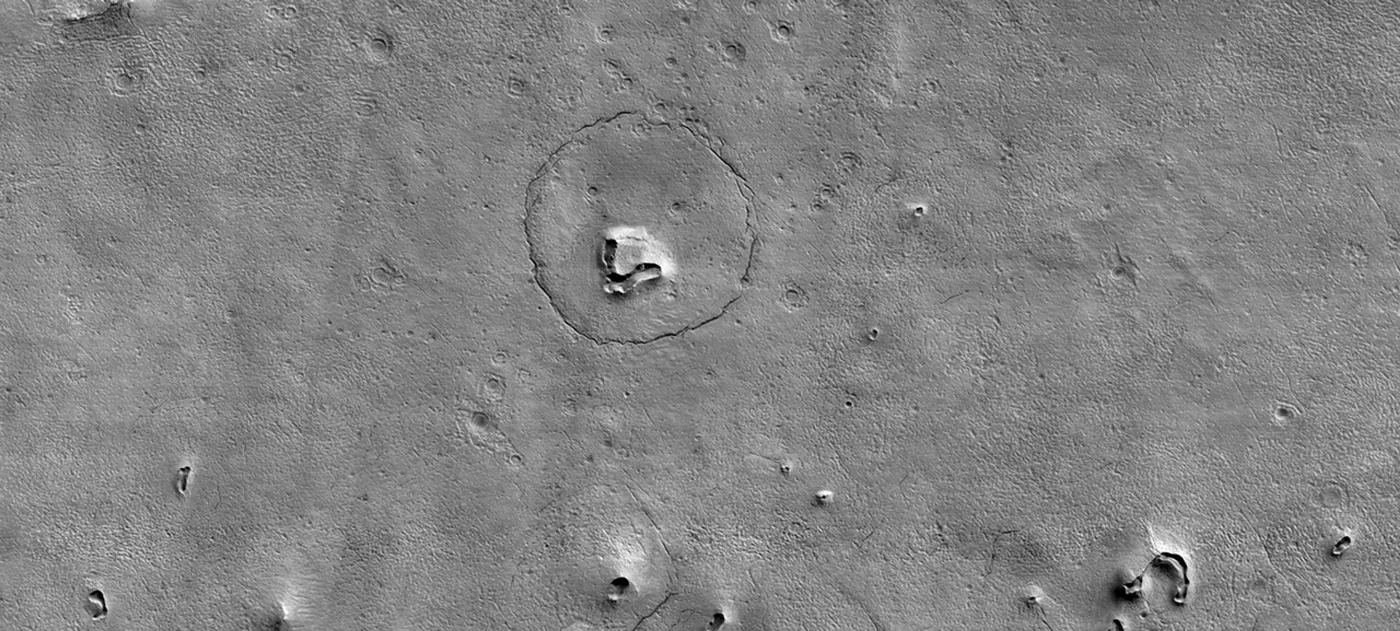
Bear-like terrain on Mars photographed by HiRISE on 12 December 2022. Real terrain imagery, not an animal. NASA/JPL-Caltech/University of Arizona, NASA educational/informational media-use guidelines.
Your coffee looks surprised. The wall socket looks disappointed. A rock on Mars appears to have borrowed a bear’s face. You have not necessarily discovered three secret characters; you may be noticing a familiar visual effect.
Face pareidolia is seeing a face-like pattern in something that is not a face. It gives everyday objects personality, and occasionally gives the internet a rather ambitious headline. The fun is real. The interpretation still needs checking.
Why the name matters
NASA’s Earth Observatory describes face pareidolia as a tendency to see faces in everyday objects and even scientific data. It relates the effect to our strong ability to recognise faces. That is not a claim that every resemblance has one simple cause or that a particular image reveals someone’s personality.
The useful distinction is between a pattern and its explanation. “These two holes look like eyes” describes an impression. “Someone built eyes into this rock” makes a claim about how it formed. The second needs evidence beyond the first.
The bear on Mars is a real image, not a real bear
The cover shows a Mars Reconnaissance Orbiter HiRISE image acquired on 12 December 2022. NASA explains the resemblance using two craters, a V-shaped collapse feature and a circular fracture pattern. It is a geological scene that happens to suggest a face.
Look once for the bear, then look again for terrain. You do not have to erase the amusing first impression to understand the second. Calling it a “bear lookalike” preserves both the joke and the distinction.
An older Martian face has a similar lesson
The famous “Face on Mars” came from Viking imagery in 1976. NASA’s account explains that lighting and viewing angle help create the appearance of a face on a natural hill. A compelling first image is not the final explanation.
When a post shows just one crop, ask what is outside it. A caption may be accurate about the resemblance while being misleading about its cause. “This looks like…” is a much smaller claim than “Scientists discovered…”.
Try a small face-hunting game at home
- Look for three harmless objects with a face-like arrangement: a bag clasp, a cupboard handle or a pattern in a cushion.
- Photograph the whole object before taking a close-up.
- Ask someone what they notice without naming your interpretation first.
- Compare the full view with the crop.
- Write two captions: a playful one and a literal one.
For example, “The cupboard disapproves” might be the playful caption; “Two knobs above a curved mark” is the literal description. This is a suggested observation game, not a psychology test. Avoid photographing strangers or entering unsafe places for a better angle.
Why a crop can change the story
A close-up removes the ordinary context that explains an object. Before sharing an extraordinary image, find the original, read its caption and distinguish the photograph from any added illustration. For a broader checklist, see checking information before sharing it.
Try preserving the context in your own caption: “This tree knot looks startled from this angle.” It is still enjoyable, and nobody has to pretend the tree is having a difficult Monday.
Quick questions
Must everyone see the same face? No. The game works perfectly well when your friend sees a potato instead.
Does a face-like rock prove intelligent construction? Not by resemblance alone. Its origin needs separate evidence.
Is this article a diagnosis? No. It explains an ordinary visual phenomenon and offers a light observation activity, not an assessment of anyone’s health.
Keep the delight, lose the unsupported claim
The best version of these discoveries is often the honest one: an ordinary object, a surprising resemblance and a caption that knows the difference. The socket can look offended without requiring an investigation into its childhood.
Image and usage credit
Bear-like terrain on Mars photographed by HiRISE on 12 December 2022. Real terrain imagery, not an animal. NASA/JPL-Caltech/University of Arizona · NASA educational/informational media-use guidelines Resized and converted to WebP; use does not imply the creator’s endorsement.