
Snowflake or Jewel? The Tiny Geometry Hiding in Winter
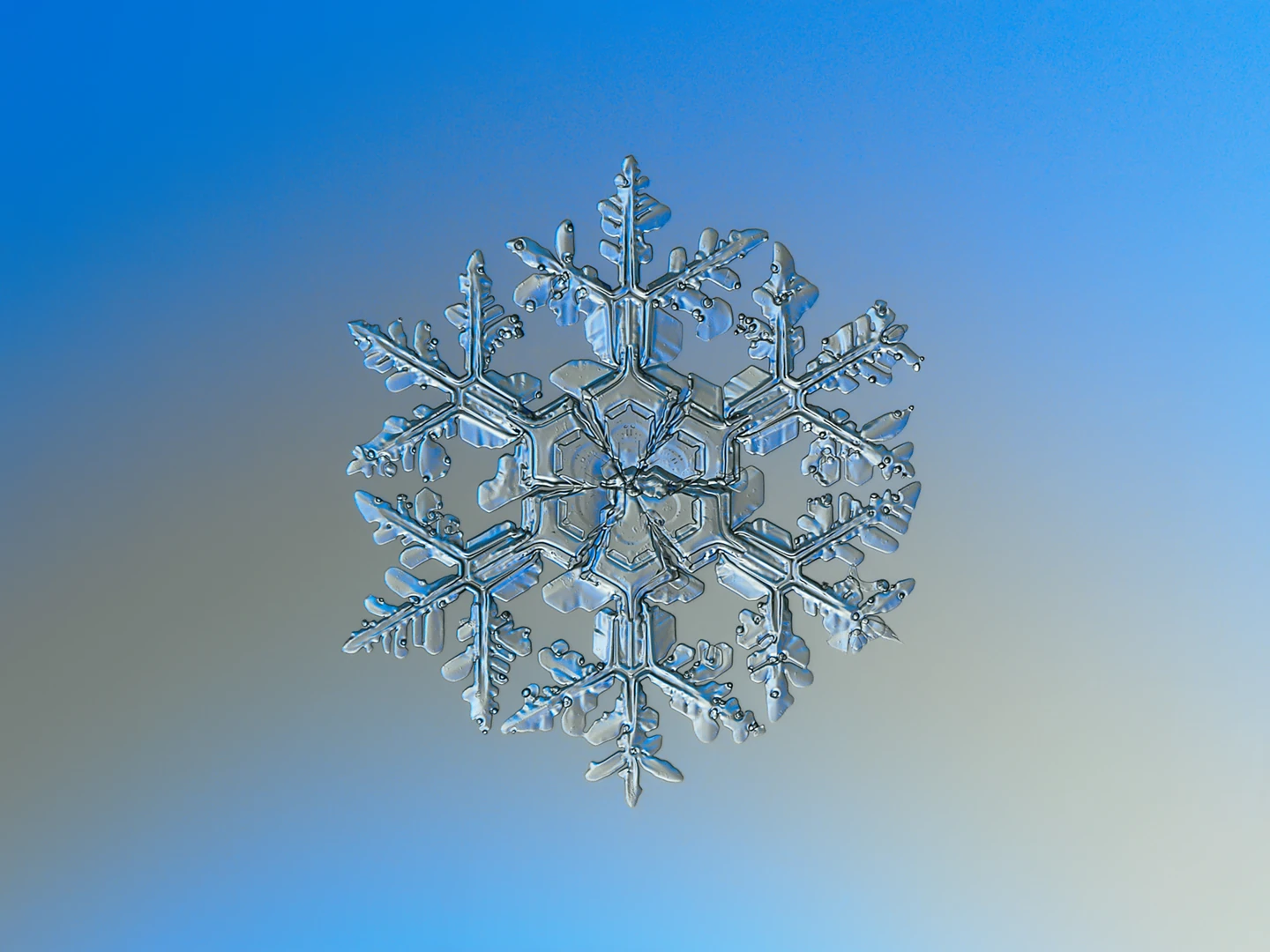
A real snow crystal about 4–5 mm across, photographed by Alexey Kljatov. Snowflake macro photography 1, CC BY-SA 4.0. The original averages 11 RAW frames; our copy is resized and converted to WebP. Source and license linked below.
- Why do snow crystals have six sides?
- How does a snowflake form inside a cloud?
- Why do the arms look alike—but not perfectly alike?
- Where did the star go? Snow has other shapes
- Are no two snowflakes really alike?
- Try a tiny snowflake hunt during the next safe snowfall
- No snow nearby? Try this from your chair
- Photographs and reuse credits
At first glance, it could be a tiny piece of jewelry: a patterned center, delicate arms, and details that seem far too elaborate for something falling out of a cloud. But the subject of the cover photograph is a real snow crystal, photographed close up by Alexey Kljatov.
The surprising part is not just its beauty. Its shape reflects conditions it encountered while growing. You do not need a chemistry degree to appreciate that story. You just need to stop looking at winter as one enormous white surface.
Why do snow crystals have six sides?
The starting point is how water molecules arrange themselves in ordinary atmospheric ice. The crystal structure is hexagonal, and that underlying order influences the growing crystal's sides and arms. A water droplet does not arrive shaped like a star. Chemist Jason Benedict explains the connection in this University at Buffalo science briefing.
Try tracing the photograph with your eyes. Start at the center and count the main directions around it. Finding a simple rule inside such an elaborate shape is more satisfying than memorizing a definition. But a six-part pattern does not make every arm a flawless copy of its neighbor.
How does a snowflake form inside a cloud?
NOAA describes a common beginning: a very cold droplet freezes around a tiny particle, such as dust or pollen. Water vapor then deposits as ice on the crystal, allowing it to grow. Temperature and humidity influence the shape along the way.
Think of a building growing while the conditions around its construction site keep changing. That is only an analogy: there is no miniature architect choosing each ornament. The pattern emerges as material joins the crystal. The result can be far more intricate than the small white speck you notice on a sleeve.
Why do the arms look alike—but not perfectly alike?
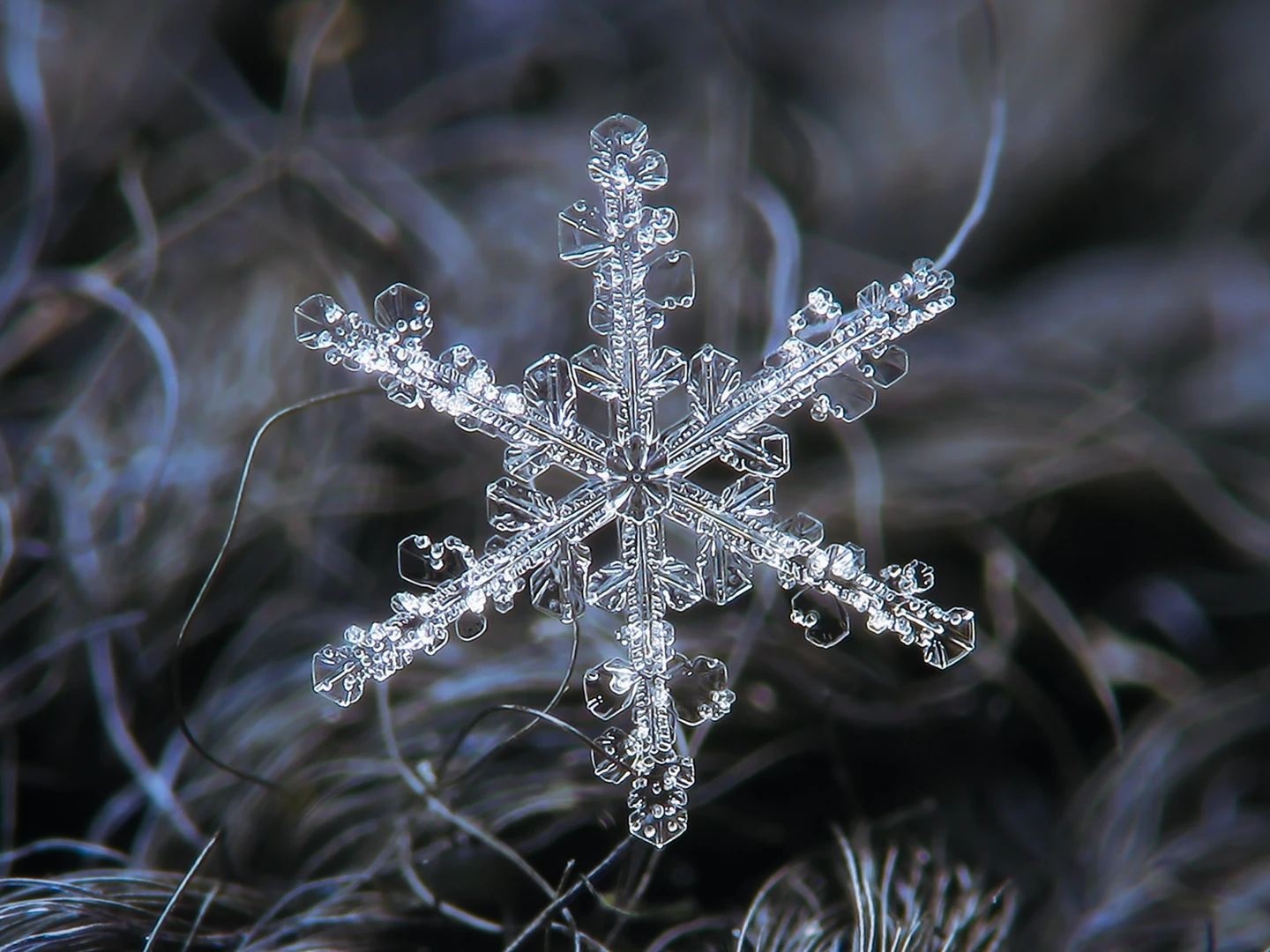
The tips of one crystal share a similar local environment, so their growth responds to similar conditions. That produces a strong family resemblance rather than six independent designs. Look closely, however, and small distortions appear. Symmetry does not mean perfection. Physicist Nathan Harshman makes that distinction in this American University interview.
Pick two opposite arms in a photograph. Instead of comparing only their outlines, look at the little side branches. Do they begin equally far from the center? Are they equally long? These are observation prompts, not a quiz with one hidden correct answer. You are learning to notice differences that a quick glance skips.
Where did the star go? Snow has other shapes
Physicist Kenneth Libbrecht's field guide includes branching stars, columns, needles, and other forms. Water droplets can also freeze onto an existing crystal, leaving a coating called rime. A flake without an obvious star shape is not somehow defective snow.
It also helps to separate a single crystal from a snowflake made of several crystals stuck together. The UCAR Center for Science Education explains that both occur. The little clump landing on your coat may not be one neatly isolated object ready for its close-up.
Are no two snowflakes really alike?
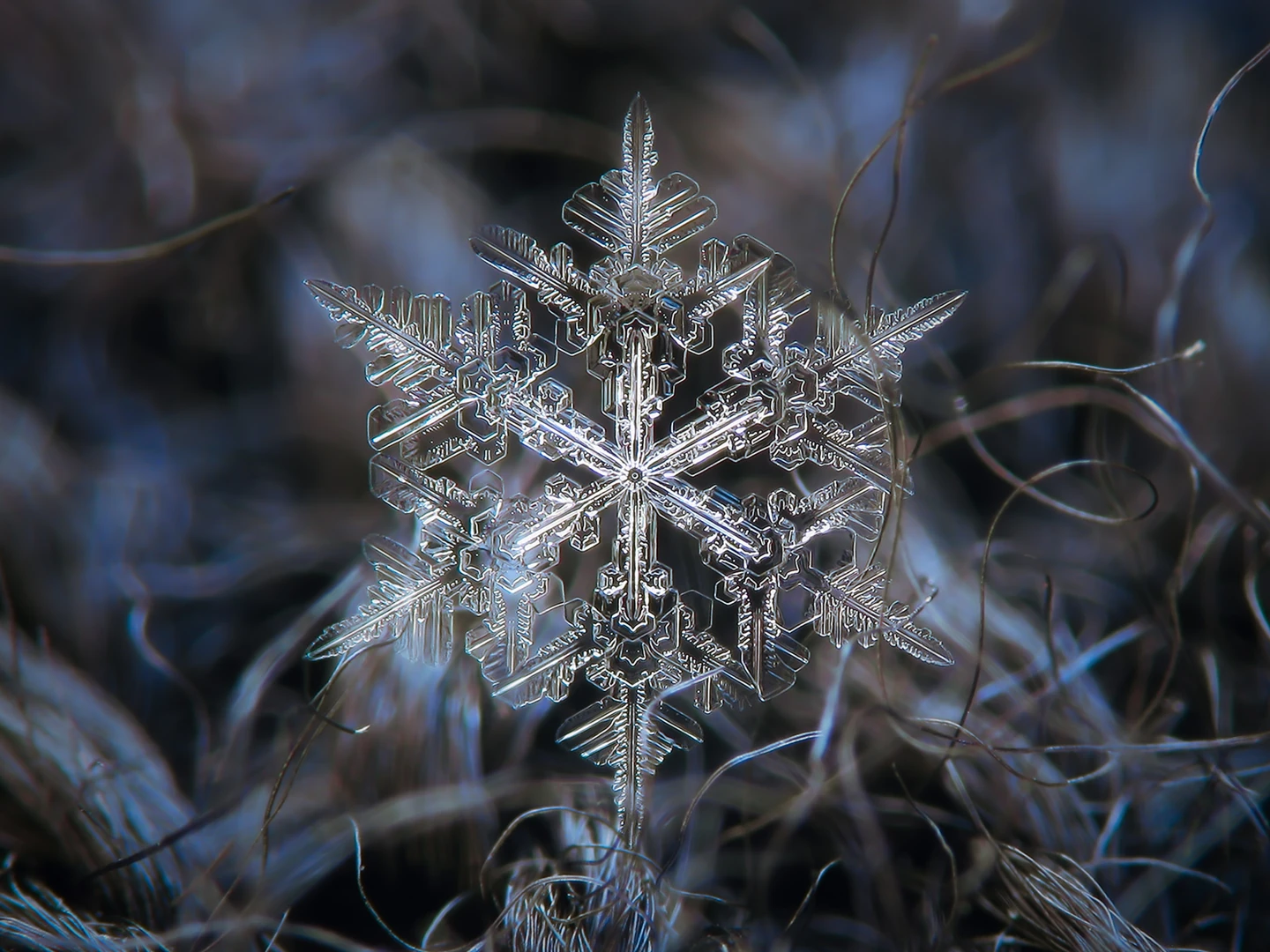
A better question is: alike at what level of detail? Crystals can look similar without having identical molecular arrangements. UCAR makes this useful distinction, while an American Chemical Society poster cautions against treating the familiar saying as an absolute, particularly for very simple crystals.
We do not need an impossible competition to make the photographs interesting. Nobody reading this is going to inspect every snowflake that has ever fallen. The rewarding discovery is more accessible: the closer you look, the less interchangeable these little objects seem.
Try a tiny snowflake hunt during the next safe snowfall
SnowCrystals suggests a dark collecting surface and a magnifier. Here is a short way to turn that idea into an observation activity when conditions are safe:
- Choose somewhere close and safe. Stay away from traffic and slippery surfaces. Do not head into a storm for a photograph; children should have an adult alongside them.
- Prepare a dark background. Dark cardboard or fabric gives you somewhere to look. Let it cool outdoors in a sheltered spot before collecting flakes, rather than using a warm surface.
- Catch fresh snowfall. Hold the surface out briefly, then inspect what lands. Start there rather than squeezing a handful of snow from the ground.
- Look first; photograph second. Use a magnifier if available. A phone with close-focus capability may help, but do not expect every phone to match these specialist photographs.
- Record three observations. Note the overall shape, one central detail, and one irregular feature. Do not touch or reposition the crystal with warm fingers to improve the composition.
No ornate star? That is still a result. Write “irregular cluster” or “details unclear.” A useful observation records what you actually saw, not what you hoped would appear.
No snow nearby? Try this from your chair
Return to the three photographs and give each a two-word description: “quiet center,” “busy edges,” or something entirely your own. Next, draw a framework pointing in six directions and add a slightly different detail to each arm. This is an art exercise for noticing symmetry, not a scientific simulation of crystal growth.
The idea worth keeping is simple: something that seems repetitive from far away can become fascinating when you change how you look at it. If you enjoy using a camera to reveal unexpected patterns, you might also like our beginner's guide to light painting.
Photographs and reuse credits
All three images are photographs of real crystals, not AI illustrations. The cover, Snowflake macro photography 1 by Alexey Kljatov, is licensed CC BY-SA 4.0. The photographer describes a crystal about 4–5 mm across and an original image made by averaging 11 RAW frames. Our published cover copy remains available under that same license; this does not relicense the article text. The two inline photographs are CC BY 2.0, with their source and license links beneath them. Attribution does not imply the photographer endorses this article.
All three full frames were preserved, with only proportional resizing and WebP conversion; no crystals or details were generated or added. The cover copy remains CC BY-SA 4.0 and the two inline copies CC BY 2.0, with attribution, source and license links above.





What do you think?
Share your thoughts or experience. Keep the conversation kind and on topic.
Participation Rules
نريدك أن تكون مصدرًا لزملائك من القراء ونأمل أن تستخدم قسم التعليقات لإجراء ذلك. لقد صممناها لرفع وتوسيع الاستجابات الأكثر ذكاءً وإدانةً ، وتقليل أو إخفاء الأسوأ. هذه هي قواعد الطريق:
ابقى في صلب الموضوع
عند تقديم تعليق ، لا تخرج عن الموضوع. لا تعلق على المعلقين الآخرين أو معتقداتهم السياسية المفترضة. ناقش مزايا القصة نفسها. لا تنشر تومي. هذا ليس المكان المناسب لصق فصل من رسالتك (أو أي شخص آخر) أو ورقة بيضاء.
أظهر الإحترام.
نحن نشجع ونقدر النقاش العميق. ما عليك سوى التأكد من أنه عندما لا تتفق مع فرضية القصة أو أي معلق آخر ، فإنك تفعل ذلك بطريقة محترمة ومهذبة.
كن مهذبا وحافظ على نظافته
نحن نغطي التكنولوجيات الجديدة موقعنا ليس منفذاً للفظاظة. نحن لا نتسامح مع الإهانات الشخصية ، بما في ذلك استدعاء الأسماء أو العنصرية أو التمييز الجنسي أو الكلام الذي يحض على الكراهية أو الفحش. هذا يعني أنه لا توجد أي ملاحظات بذيئة أو مسيئة أو مضايقة أو تنمر. إذا لم تكن مدنيًا ومهذبًا ، فلا تنشره.
تجاهل المتصيدون
أفضل رد على القزم - شخص ما يتكرر عدائيًا واستفزازًا - ليس ردًا. من فضلك لا تشجع السلوك السيئ عن طريق الاستجابة ؛ انها لا تخدم سوى لسرور المتصيدون والبيض عليها. إذا كان هناك شخص ما يسيء استخدام موضوع مناقشة ، فأبلغ عن أي تعليقات مسيئة ، وسنتناول الموقف.
كن مسؤولاً وأصيلاً
انشر آرائك فقط بكلماتك الخاصة. أنت مسؤول عن المحتوى الذي تنشره.
لا تنشر رسائل غير مرغوب فيها أو إعلانات
إذا لم يكن لديك عقد إعلان معنا ، فإن هذا الموقع الإلكتروني ليس عبارة عن لوحة إعلانات لنشاطك التجاري. لا تنشر محتوى غير مرغوب فيه أو محتوى ترويجي ذاتي أو حملات إعلانية. لا ضغط أو تجنيد أو استجداء.
نقرأ التعليقات
على الرغم من أن مجالس مناقشاتنا لا تخضع للإشراف الرسمي ، إلا أننا نولي اهتمامًا وثيقًا بها. نحتفظ بالحق في تعديل أو حذف التعليقات التي لا تلبي معاييرنا.
نحن نحظر الأعضاء الفاضحين
إنه ليس شيئًا نتمتع به. ولكن عند الضرورة ، سنحظر الأعضاء الذين لا يلتزمون بهذه الإرشادات.
شكرا على اتباع هذه المبادئ التوجيهية.