
Who’s That Bird? Start Birdwatching Without Buying Gear
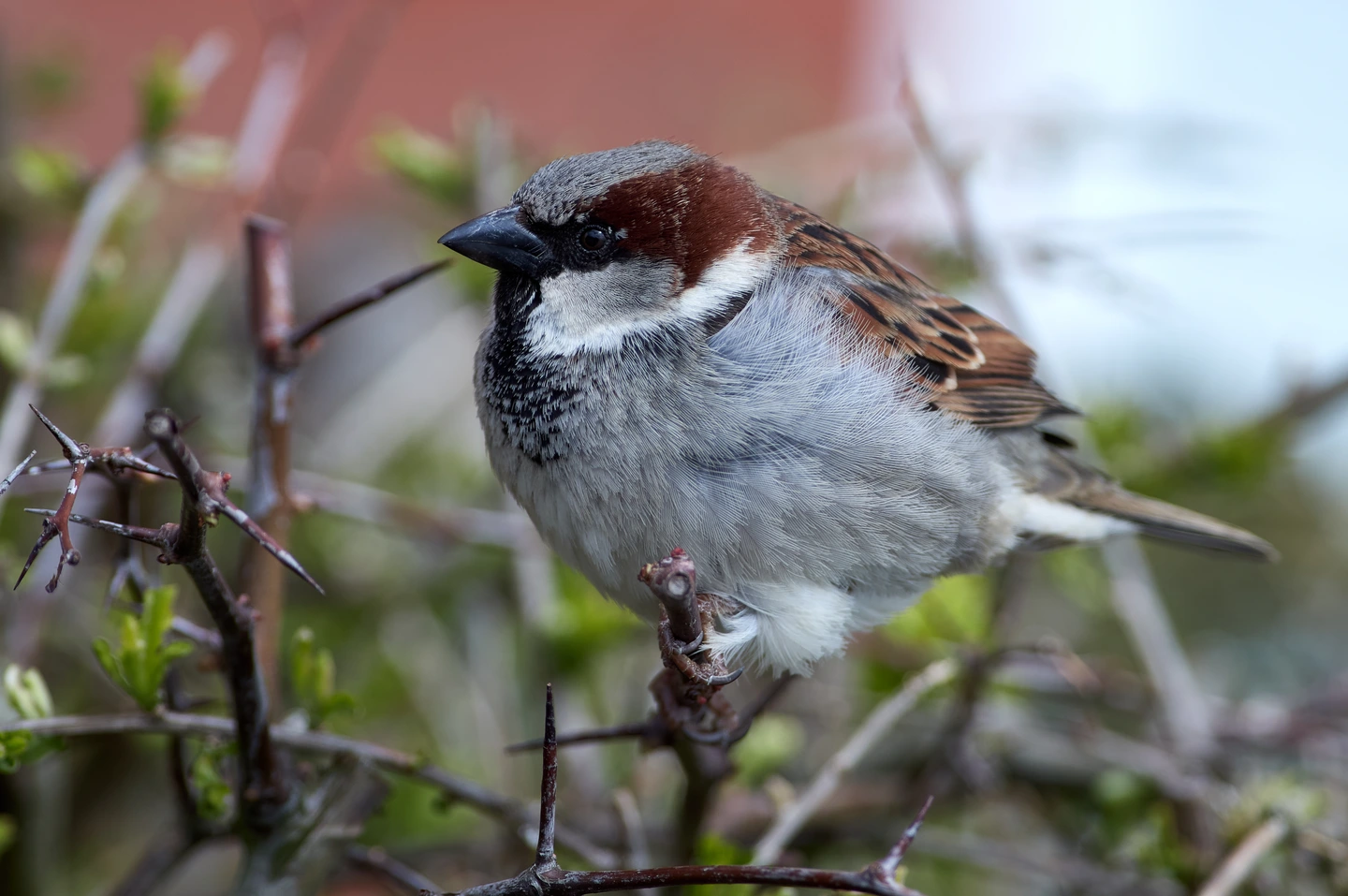
Male house sparrow on Amrum, Germany. Hobbyfotowiki / Wikimedia Commons, CC0; source and image rights linked in the article.
- Start with one bird, not a shopping list
- Give yourself a better question than “What color was it?”
- Practice on the photographs before your first watch
- Watch one small action before reaching for the phone
- Compare possibilities instead of accepting the first match
- Keep a record that separates seeing from guessing
- Let the bird carry on with its day
- Try one short watch, then return with one question
A small bird lands nearby. You reach for your phone, type “little brown bird,” and find a hundred possibilities. By the time you look up, your mystery guest has left.
Try making the first goal smaller: come away with a useful description, not necessarily a name. A bird that used to be background scenery can become the most interesting thing outside your window. This guide gives you a short photo exercise, a first-watch plan, and a note you can reuse without buying equipment.
Start with one bird, not a shopping list
Pick a safe, accessible place you can revisit: a window at home, a public park bench, or a permitted viewing spot. For this first session, use a bird you can already see comfortably. Binoculars can help later, but buying them need not be your first task.
The RSPB’s introductory activity suggests watching from a window or local green space, staying still and quiet, and checking that your chosen spot is safe and permitted. We suggest a brief first visit below; that timing is our own starting point, not the RSPB’s activity duration.
Make the challenge pleasantly specific: “I will describe one visitor before opening a search.” If nothing appears, you have not failed. Note where you looked and try another convenient time. There is no appointment book for wild birds.
Give yourself a better question than “What color was it?”
Audubon’s identification guide emphasizes structure and actions as well as plumage; light and distance can obscure markings, and not every sighting can be identified. A description is a clue, not a verdict.
For your first note, try this sentence frame: “I noticed a ___-shaped bird, with a ___ bill, doing ___, at ___.” Fill only what you actually saw. “The tail was hidden” is better than quietly inventing a tail that fits your favorite answer.
Imagine two friends reporting the same brief visit. One says, “It was cute and brown.” The other says, “Its bill looked short and thick; it moved between the ground and a low branch.” Neither description proves a species, but the second gives you questions to investigate. This is a hypothetical comparison, not one of our field sightings.
Practice on the photographs before your first watch
Look back at the cover bird without reading its name again. Find one feature on the head, one on the wing, and one in the outline. Then describe the photograph below in the same way. Keep your notes concrete: point to the area you mean rather than writing only “pretty feathers.”
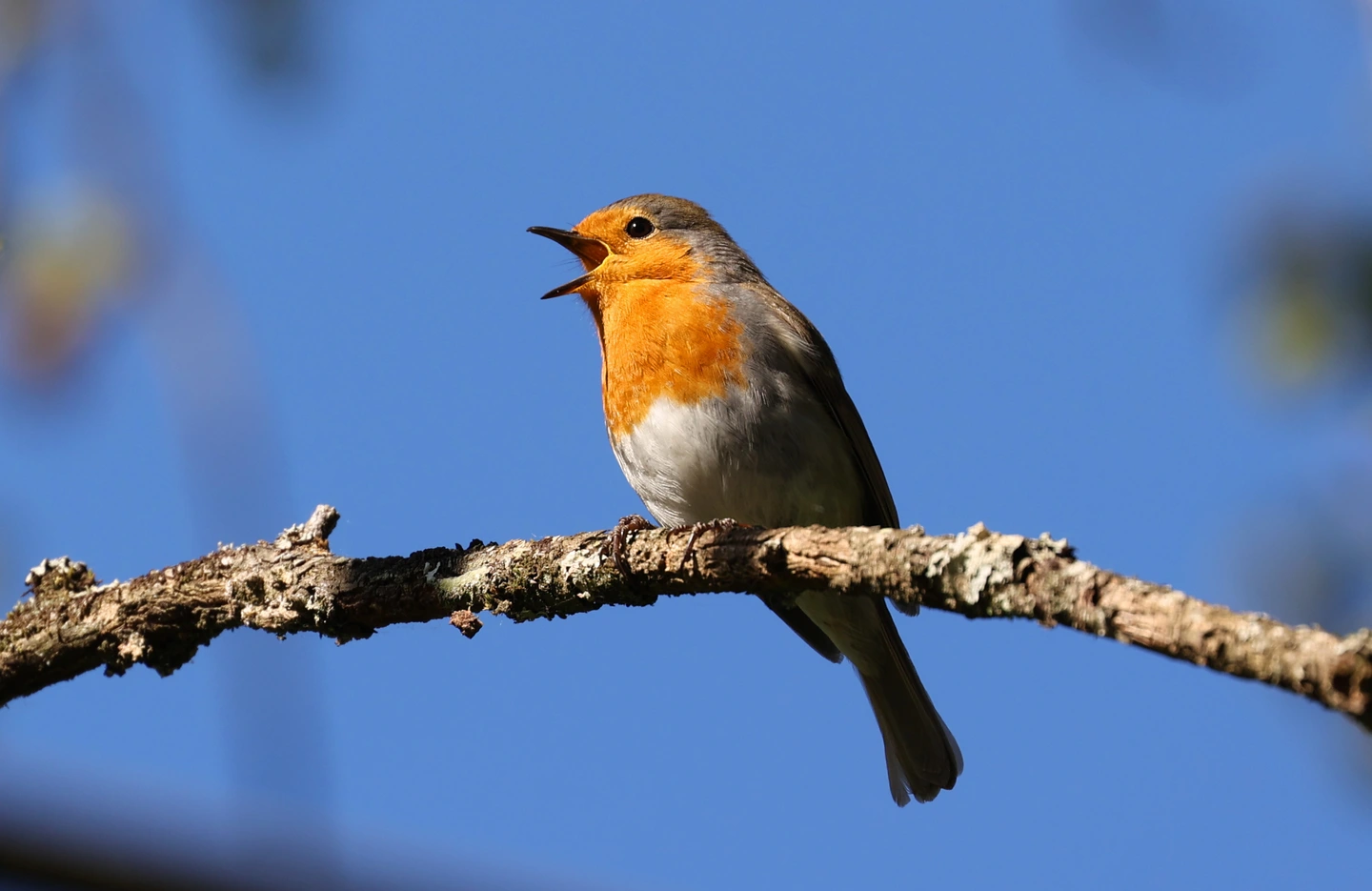
In these two photographs, you can compare the sparrow’s stout bill and dark throat with the robin’s finer bill and orange face and breast. Those are observations about these pictured birds, not a rule that identifies every brown or orange bird. Neither photograph tells you how its subject moved or sounded.
That last blank matters. A photograph can help you rehearse describing visible details, but it cannot supply behavior you did not witness. Nor do these photographs promise that either species will appear at your window.
Watch one small action before reaching for the phone
Give yourself one modest task: describe what the bird does next. Does it stay on the same perch, move into cover, or cross to another surface? Write an ordinary verb rather than a story about its intentions. “It turned toward another bird” is an observation; “it wanted to make friends” is your interpretation.
If you take a photo, keep it as a supporting note rather than making the whole outing a hunt for a perfect frame. A distant record can remind you of a moment even when it is not suitable for identification. Do not move closer just to rescue a weak picture.
You can enjoy the scene without naming anything. Watching a familiar corner become a place with arrivals, departures, and tiny disagreements is already a worthwhile change from scrolling.
Compare possibilities instead of accepting the first match
When the bird leaves, consult a guide that covers your region. Start with your location and date, then compare the details in your note with the candidate descriptions. A North American or British beginner article can teach an observation skill without being a checklist of what lives in Lebanon—or anywhere else.
Make two short columns on paper: “What fits?” and “What do I still need to see?” If one possible bird has a marking you never saw clearly, leave that item open. Do not turn “not noticed” into “definitely absent.”
If asking an experienced local observer, send the photograph or notes with the country, approximate area, date, and setting. “Seen yesterday beside a public garden in my city” gives more context than a cropped bird against an empty sky. Keep home addresses and sensitive locations private.
Keep a record that separates seeing from guessing
Copy this small template into your notebook or phone. It is our proposed worksheet, not a formal survey or a scientific count.
- Where and when: general location, date, time, and viewing spot.
- I could clearly see: a few visible details in plain language.
- It did: one action I actually watched.
- I could not tell: hidden parts, unclear colors, or an uncertain sound source.
- Possible name: a candidate, or simply “unidentified.”
- Next useful check: the one missing detail I want to look for.
For example: “Small bird on the hedge; bill looked short; moved to the ground; underside hidden; unidentified; next time, try to see the breast from this same spot.” That is an invented example to show the format. It is more honest—and more reusable—than a confident name attached to a vague memory.
Let the bird carry on with its day
The American Birding Association’s ethics code puts avoiding stress and habitat disturbance first, with particular care around nests and roosts. For this beginner watch, leave nests alone, stay on permitted paths, and skip playback or lures. Respect other people and local rules. If getting the view requires disturbing the bird, keep the incomplete note instead.
This is observation, not an invitation to handle wildlife. You do not need to feed a bird, approach its nest, or make it react to count the session as interesting. The quietest version of the activity is often also the simplest to arrange.
Try one short watch, then return with one question
Our suggested first session is ten minutes: settle in for two, watch for five, and use the last three to write your note. This is an optional structure, not a guarantee of a sighting or a tested training method. Extend it if you are comfortable, or stop earlier.
On your next visit, bring back one unfinished question rather than a target number of species. “Can I see that bird’s bill more clearly?” is a manageable goal. If you enjoy noticing how appearance can mislead, our octopus camouflage article explores a very different animal’s disappearing act.
Photo credits: the cover shows a male house sparrow photographed on Amrum, Germany, in 2019 by Hobbyfotowiki / Wikimedia Commons, released under CC0 1.0. Both photographs were proportionally resized and converted to WebP; display crops may vary. No AI imagery, fieldwork claim, or photographer endorsement is implied.
You may finish with a bird’s name. You may finish with an excellent unanswered question. Either is more interesting than “just another little brown bird.”
Both real photographs are shared across languages with localized descriptions and preserved proportions. The robin image and its resized version are CC BY-SA 4.0; the sparrow image is CC0 1.0. No AI generation or first-hand fieldwork is claimed. These are reference examples, not a local species checklist or conclusive identification of every sighting.


What do you think?
Share your thoughts or experience. Keep the conversation kind and on topic.
Participation Rules
نريدك أن تكون مصدرًا لزملائك من القراء ونأمل أن تستخدم قسم التعليقات لإجراء ذلك. لقد صممناها لرفع وتوسيع الاستجابات الأكثر ذكاءً وإدانةً ، وتقليل أو إخفاء الأسوأ. هذه هي قواعد الطريق:
ابقى في صلب الموضوع
عند تقديم تعليق ، لا تخرج عن الموضوع. لا تعلق على المعلقين الآخرين أو معتقداتهم السياسية المفترضة. ناقش مزايا القصة نفسها. لا تنشر تومي. هذا ليس المكان المناسب لصق فصل من رسالتك (أو أي شخص آخر) أو ورقة بيضاء.
أظهر الإحترام.
نحن نشجع ونقدر النقاش العميق. ما عليك سوى التأكد من أنه عندما لا تتفق مع فرضية القصة أو أي معلق آخر ، فإنك تفعل ذلك بطريقة محترمة ومهذبة.
كن مهذبا وحافظ على نظافته
نحن نغطي التكنولوجيات الجديدة موقعنا ليس منفذاً للفظاظة. نحن لا نتسامح مع الإهانات الشخصية ، بما في ذلك استدعاء الأسماء أو العنصرية أو التمييز الجنسي أو الكلام الذي يحض على الكراهية أو الفحش. هذا يعني أنه لا توجد أي ملاحظات بذيئة أو مسيئة أو مضايقة أو تنمر. إذا لم تكن مدنيًا ومهذبًا ، فلا تنشره.
تجاهل المتصيدون
أفضل رد على القزم - شخص ما يتكرر عدائيًا واستفزازًا - ليس ردًا. من فضلك لا تشجع السلوك السيئ عن طريق الاستجابة ؛ انها لا تخدم سوى لسرور المتصيدون والبيض عليها. إذا كان هناك شخص ما يسيء استخدام موضوع مناقشة ، فأبلغ عن أي تعليقات مسيئة ، وسنتناول الموقف.
كن مسؤولاً وأصيلاً
انشر آرائك فقط بكلماتك الخاصة. أنت مسؤول عن المحتوى الذي تنشره.
لا تنشر رسائل غير مرغوب فيها أو إعلانات
إذا لم يكن لديك عقد إعلان معنا ، فإن هذا الموقع الإلكتروني ليس عبارة عن لوحة إعلانات لنشاطك التجاري. لا تنشر محتوى غير مرغوب فيه أو محتوى ترويجي ذاتي أو حملات إعلانية. لا ضغط أو تجنيد أو استجداء.
نقرأ التعليقات
على الرغم من أن مجالس مناقشاتنا لا تخضع للإشراف الرسمي ، إلا أننا نولي اهتمامًا وثيقًا بها. نحتفظ بالحق في تعديل أو حذف التعليقات التي لا تلبي معاييرنا.
نحن نحظر الأعضاء الفاضحين
إنه ليس شيئًا نتمتع به. ولكن عند الضرورة ، سنحظر الأعضاء الذين لا يلتزمون بهذه الإرشادات.
شكرا على اتباع هذه المبادئ التوجيهية.