
Bouldering for Beginners: A Puzzle You Solve With Your Body
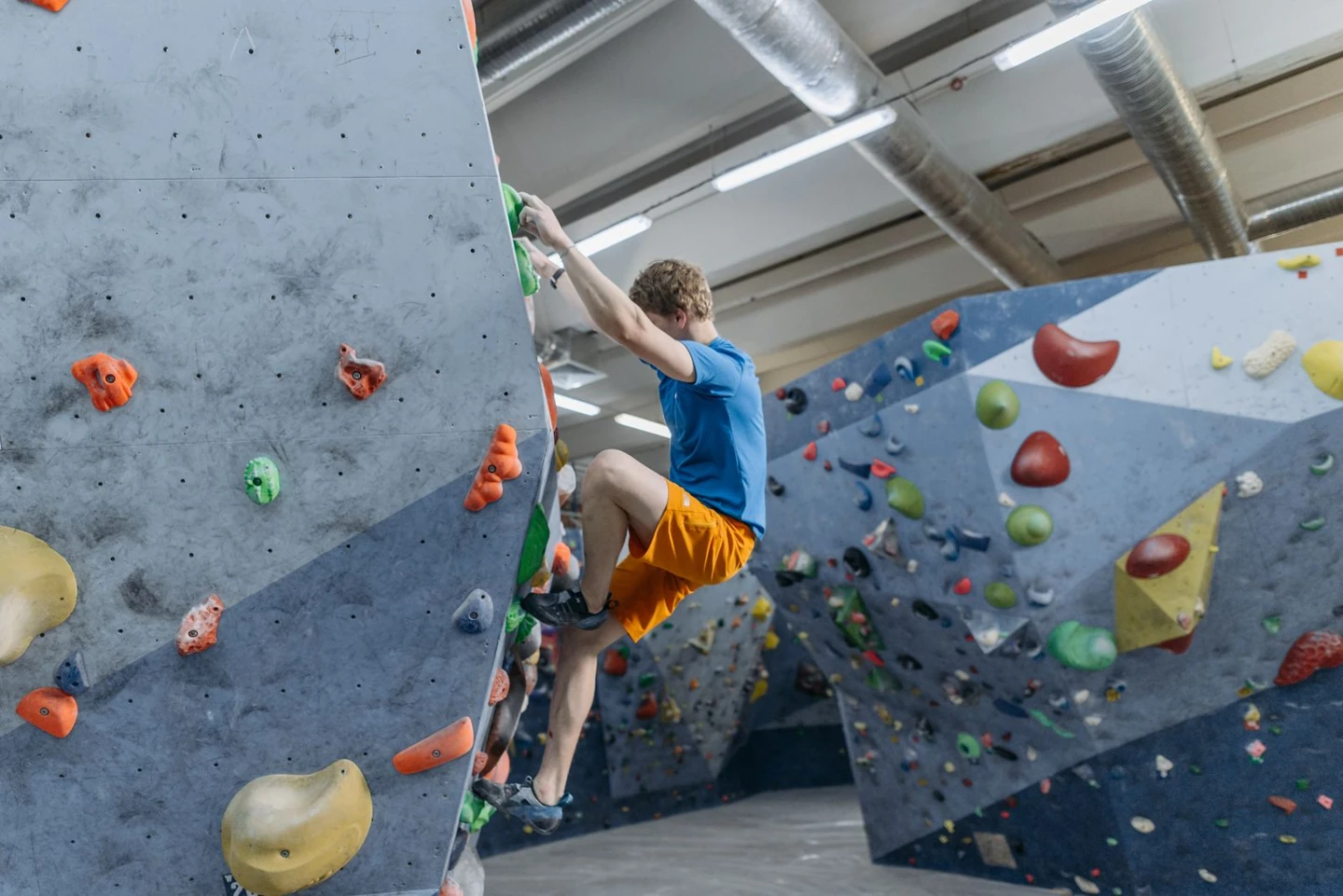
A man climbing an indoor bouldering wall with colorful holds. Illustrative photograph: Pavel Danilyuk / Pexels; not a session we conducted or a move to copy.
- What is bouldering—and how is it different from rope climbing?
- Your arms are not supposed to do all the thinking
- How do you read the colors and grades?
- Before your first visit, ask questions—not your shopping cart
- Padded flooring is not a promise of a harmless landing
- A first-visit idea: learn one thing well
- Give other people a turn—and let them keep their puzzle
- What if you feel hesitant—or cannot finish anything?
- Photographs and sources
You stand in front of a wall covered in colorful holds. The next handhold looks obvious. Then you discover the awkward question: where is your foot supposed to go? That is where bouldering becomes interesting. You do not have to turn into an action hero hanging from fingertips; you have to understand a small movement that makes the route less mysterious.
Bouldering can feel like a puzzle you solve with your body. This guide explains the idea and helps you plan a first visit to a specialist indoor gym. It does not teach falling or replace in-person instruction. A shorter wall and padded flooring do not make climbing injury-free.
What is bouldering—and how is it different from rope climbing?
The Reach climbing center describes bouldering as climbing shorter walls without ropes or harnesses, above padded flooring. It is a different activity from climbing longer roped routes; do not automatically transfer one activity's rules to the other.
Climbers often call a short route a problem. Think of it as a movement question: how do you get from the start to the finish using that problem's rules? The satisfying moment may be understanding one move rather than reaching the highest point in the building.
Your arms are not supposed to do all the thinking
REI's instructor-written movement guide emphasizes feet, balance, and efficiency rather than hauling yourself upward with your arms alone. Ask an instructor to demonstrate those ideas on a suitable easy climb: where should your feet go, and how does body position change the reach?
Keep one good question in mind: “Is that hold really too far away, or am I starting in an awkward position?” Do not turn the question into an improvised leap. Watch from a safe place, ask, and try the movement your instructor explains within your limits. An exciting photograph is not a training plan.
How do you read the colors and grades?
You might see labels such as VB or V0, or a different grading system. REI's bouldering guide explains that higher V-scale numbers indicate greater difficulty, but grades are subjective and can vary between locations. A grade is not a verdict on your fitness or the value of your visit.
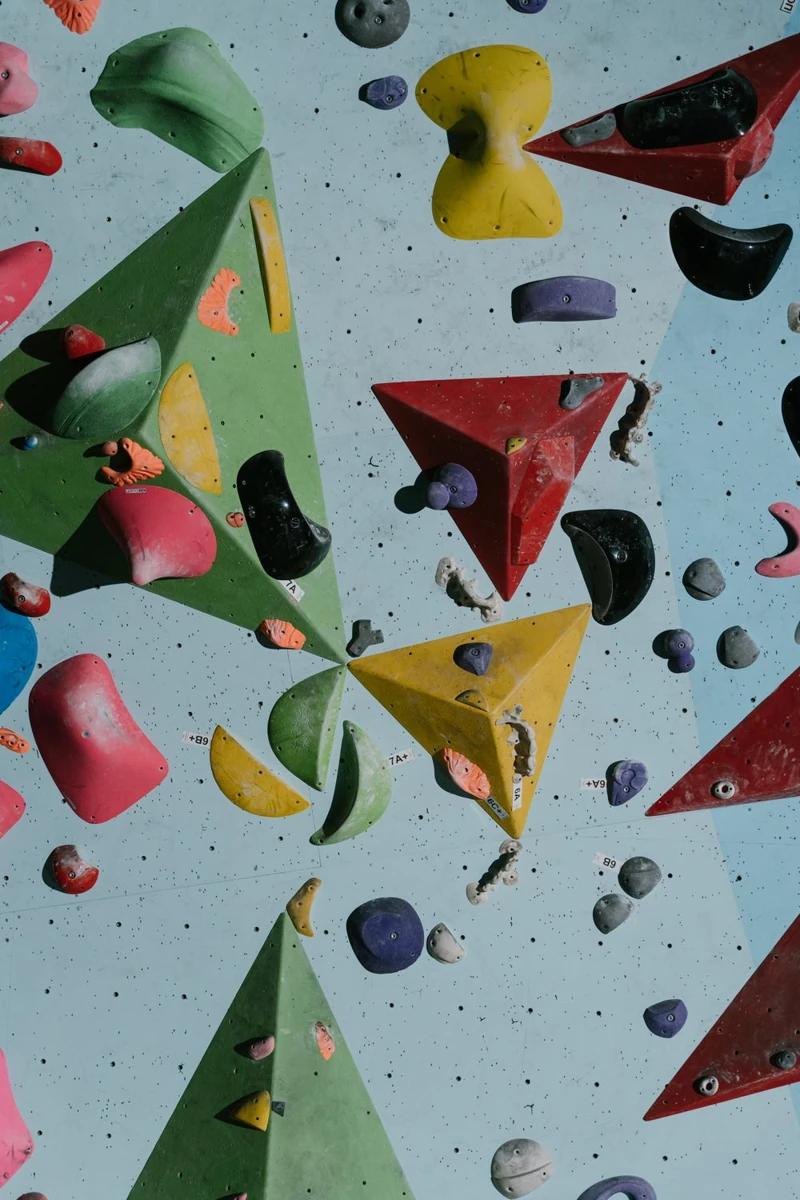
The hold color and the difficulty-marker color may serve different purposes. Boulders' first-visit guide provides one example of using colors and tags to identify climbs. Ask your gym which holds belong to a problem, where it starts and finishes, and which area suits a beginner. Green does not universally mean easy.
Before your first visit, ask questions—not your shopping cart
Some centers rent climbing shoes; The Climbing Academy's beginner information gives one example. Entry and induction policies differ: Boulder UK requires a first-visit induction for people new to bouldering. These are examples of policy differences, not recommendations to travel to a particular venue.
- Do you need a booking or induction, and who will explain safety and descending?
- Are suitable rental shoes available? What clothing allows movement without catching on equipment?
- Is there a beginner area or coached session, and what age and supervision rules apply?
- What are the actual entry and rental costs, and when is the gym less crowded?
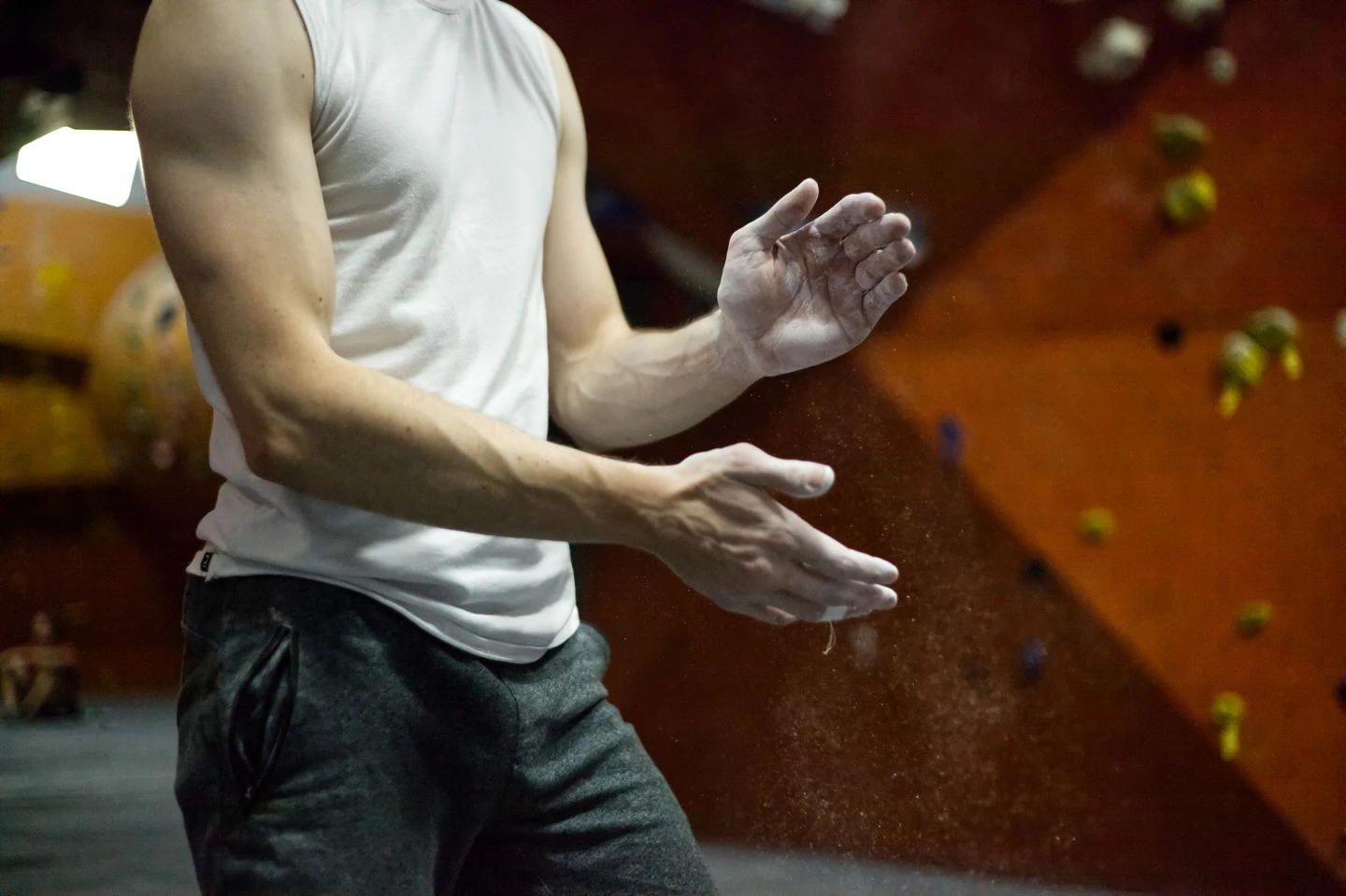
Start with a visit that helps you discover what suits you, not a complete equipment collection. Ask about chalk use and the gym's policy rather than assuming you need everything you see in climbing videos.
Padded flooring is not a promise of a harmless landing
The Association of British Climbing Walls' safety guidance is clear: matting does not remove injury risk. Warm up, start easy, stay out from beneath climbers, keep landing areas clear, and downclimb where possible under the center's rules.
Get in-person instruction in descending and managing falls before climbing. Tell staff you are new; do not imitate videos or improvise catching someone. Only go over a wall where staff explicitly permit it. Stop for pain, exhaustion, or loss of control.
A first-visit idea: learn one thing well
This is a suggested way to organize your attention after the safety briefing and with staff or instructor guidance. It is not a prescribed number of attempts or a physical training program:
- Understand the space. Let the instructor choose an appropriate starting point and explain markings, descending, and where to wait.
- Choose one question. “Where should I look before moving my foot?” is more manageable than trying to master everything.
- Notice one suitable attempt. After resting, discuss a small adjustment with the instructor rather than hunting for a harder stunt.
- Record what clicked. “I started noticing footholds” is a real takeaway even if you did not finish the problem.
- Leave something for next time. Finish before the visit turns into a contest to prove yourself to other people.
Your first victory may be tiny: you stop staring at a distant handhold and notice a nearby step you had overlooked. That is enough to make the wall more interesting than a strength test.
Give other people a turn—and let them keep their puzzle
Take turns, keep belongings away from the bottom of climbs, and do not force help or instructions on others. These are principles in Boulders' first-visit guidance. Before explaining a solution, try asking: “Would you like a suggestion, or are you enjoying figuring it out?”
Ask permission before filming, and do not let a phone or a friend become an obstacle in a landing area. Rest outside that space, not on the mat below someone concentrating on a move. Being an encouraging companion does not require standing close to the wall.
What if you feel hesitant—or cannot finish anything?
Tell the instructor. You can ask for more explanation or simply watch from an approved place. You do not have to climb higher than feels comfortable or complete a problem to learn something useful. If an injury or health condition makes the activity's suitability unclear, get appropriate professional advice before trying it.
And if climbing is not your thing, that is useful information too. Perhaps a relaxed first game of badminton suits you better. If you enjoy understanding an attempt rather than just counting successes, our beginner's guide to reviewing chess mistakes has a related spirit: ask a specific question instead of giving yourself a vague scolding.
Photographs and sources
Cover photograph: Pavel Danilyuk / Pexels; inline photographers are credited beneath their images. These are real illustrative photographs, not a session we conducted or a movement sequence to copy. They are used under the Pexels License without implying photographer endorsement. Professional sources are linked for explanation and checking; your gym's rules and in-person instruction govern practice.
Image preparation used proportional resizing and WebP conversion only, without cropping or generating elements. Both language versions use the same real photographs, with photographer and license links above.



What do you think?
Share your thoughts or experience. Keep the conversation kind and on topic.
Participation Rules
نريدك أن تكون مصدرًا لزملائك من القراء ونأمل أن تستخدم قسم التعليقات لإجراء ذلك. لقد صممناها لرفع وتوسيع الاستجابات الأكثر ذكاءً وإدانةً ، وتقليل أو إخفاء الأسوأ. هذه هي قواعد الطريق:
ابقى في صلب الموضوع
عند تقديم تعليق ، لا تخرج عن الموضوع. لا تعلق على المعلقين الآخرين أو معتقداتهم السياسية المفترضة. ناقش مزايا القصة نفسها. لا تنشر تومي. هذا ليس المكان المناسب لصق فصل من رسالتك (أو أي شخص آخر) أو ورقة بيضاء.
أظهر الإحترام.
نحن نشجع ونقدر النقاش العميق. ما عليك سوى التأكد من أنه عندما لا تتفق مع فرضية القصة أو أي معلق آخر ، فإنك تفعل ذلك بطريقة محترمة ومهذبة.
كن مهذبا وحافظ على نظافته
نحن نغطي التكنولوجيات الجديدة موقعنا ليس منفذاً للفظاظة. نحن لا نتسامح مع الإهانات الشخصية ، بما في ذلك استدعاء الأسماء أو العنصرية أو التمييز الجنسي أو الكلام الذي يحض على الكراهية أو الفحش. هذا يعني أنه لا توجد أي ملاحظات بذيئة أو مسيئة أو مضايقة أو تنمر. إذا لم تكن مدنيًا ومهذبًا ، فلا تنشره.
تجاهل المتصيدون
أفضل رد على القزم - شخص ما يتكرر عدائيًا واستفزازًا - ليس ردًا. من فضلك لا تشجع السلوك السيئ عن طريق الاستجابة ؛ انها لا تخدم سوى لسرور المتصيدون والبيض عليها. إذا كان هناك شخص ما يسيء استخدام موضوع مناقشة ، فأبلغ عن أي تعليقات مسيئة ، وسنتناول الموقف.
كن مسؤولاً وأصيلاً
انشر آرائك فقط بكلماتك الخاصة. أنت مسؤول عن المحتوى الذي تنشره.
لا تنشر رسائل غير مرغوب فيها أو إعلانات
إذا لم يكن لديك عقد إعلان معنا ، فإن هذا الموقع الإلكتروني ليس عبارة عن لوحة إعلانات لنشاطك التجاري. لا تنشر محتوى غير مرغوب فيه أو محتوى ترويجي ذاتي أو حملات إعلانية. لا ضغط أو تجنيد أو استجداء.
نقرأ التعليقات
على الرغم من أن مجالس مناقشاتنا لا تخضع للإشراف الرسمي ، إلا أننا نولي اهتمامًا وثيقًا بها. نحتفظ بالحق في تعديل أو حذف التعليقات التي لا تلبي معاييرنا.
نحن نحظر الأعضاء الفاضحين
إنه ليس شيئًا نتمتع به. ولكن عند الضرورة ، سنحظر الأعضاء الذين لا يلتزمون بهذه الإرشادات.
شكرا على اتباع هذه المبادئ التوجيهية.